


Anna
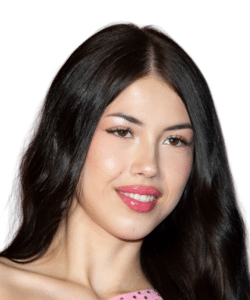
Artist: Anna
Real Name: Anna Pepe
Born: 15 August 2003, La Spezia
Roots: La Spezia, Liguria
Active since: 2018
Style: Rap and trap
Debut album: Vera Baddie (2024) ↗
Biography
Anna is the stage name of Anna Pepe, an Italian rapper born in La Spezia on 15 August 2003. Emerging while still a teenager, she quickly attracted attention with her confident delivery, memorable hooks and a sound that brings together trap, hip-hop and club music. Her rise has made her one of the most prominent female voices in contemporary Italian rap, with an audience that extends well beyond the genre’s traditional following.
She grew up in a creative household: her father is a DJ with a background in soul and hip-hop, while her mother is a sculptor. Music was part of her life from an early age, and listening to both Italian rap and international artists helped shape her ambitions. Nicki Minaj became a particularly important reference, offering an example of a woman who could combine technical ability, a strong visual identity and mainstream success without giving up her place within rap.
Anna began sharing freestyle videos online in 2018, using social media to introduce her voice before she had an established audience or a substantial catalogue. Her breakthrough came with “Bando,” officially released in January 2020. Built around an infectious beat and an immediately recognisable vocal performance, the track spread rapidly online and reached the top of the Italian singles chart. At just sixteen, she became the youngest artist to reach number one on the chart with a debut single.
That sudden exposure brought opportunities, but also the challenge of developing a career under public scrutiny. Anna had become famous before she had time to establish the full range of her music. The years that followed were therefore about building an identity beyond her first hit, developing her writing and proving that she could sustain listeners’ interest. Collaborations with established artists helped her become increasingly integrated into the Italian rap scene.
Her music combines assertive verses with melodic phrases and rhythms designed for clubs and live audiences. Confidence, independence, attraction and relationships recur in her lyrics, often expressed through humour and direct, conversational language. Alongside that outward self-assurance, she has spoken in interviews about insecurity, criticism and the pressures of growing up in public. The contrast between her bold performances and her more reflective accounts of everyday life adds another dimension to her public image.
Collaborations with artists including Guè, Lazza, Sfera Ebbasta and Capo Plaza further expanded her reach. Songs such as “Cookies n’ Cream” and “Vetri neri” placed her alongside some of the country’s biggest names, while her own releases strengthened her position as a leading artist in her own right.
Her growing profile also brought international recognition. In March 2025, she received the Global Woman of the Year award for Italy at the Billboard Women in Music ceremony in Los Angeles. From early freestyle videos in La Spezia to major stages and chart success, Anna has built a career that reflects the growing visibility and commercial strength of women within Italian rap.
Albums
Released on 28 June 2024, Vera Baddie is Anna’s debut studio album. Across 18 tracks, she brings together rap, trap and club-oriented sounds in a record built around confident performances, catchy hooks and a strong sense of personality. After several years of successful singles and collaborations, the album gives her room to present a broader picture of herself, moving between celebration, ambition, relationships and moments of uncertainty.
Much of the record draws its energy from the contrast between Anna’s relaxed delivery and her more forceful verses. She can sound playful and conversational before switching to a sharper flow, keeping her voice at the centre of productions that range from heavy bass and electronic rhythms to more traditional hip-hop influences. “I Got It” highlights her rhythmic precision, while “30°C” brings a lighter, summery atmosphere and one of the album’s most immediate choruses.
The guest list places her alongside several generations of Italian rap. Guè appears on “Bikini,” Lazza joins her on “BBE,” and Sfera Ebbasta features on “Chica Italiana.” Elsewhere, Tony Boy and thasup contribute to “ABC,” while Artie 5ive trades verses with Anna on “I Love It.” These collaborations introduce different voices and styles without taking attention away from the artist leading the record.
Beneath the confident image, Vera Baddie also makes space for vulnerability. “Una tipa come me” offers a more personal perspective, revealing doubts and emotional needs behind the self-assured exterior. Those moments give the album greater depth: independence and success sit alongside the desire to be understood and to form sincere relationships.
The album reached number one in Italy and became a defining release in Anna’s rise. Its appeal rests on the combination of accessible songs and a clear grounding in rap, allowing her to reach a wide audience while developing the style that first brought her attention. More than a collection of potential hits, Vera Baddie establishes the musical personality at the centre of her career.
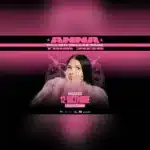
Released on 10 July 2026, Million Dollar Babe is Anna’s second studio album. Its 14 tracks expand her sound beyond the approach of Vera Baddie, bringing rap and trap into contact with dance-pop, electronic production and touches of reggaeton. Working closely with producer Miles, Anna creates a compact record that pairs energetic, club-ready songs with more personal reflections on relationships, self-worth and the pressures of success.
“White Girl Wasted,” released ahead of the album, introduces its more extroverted side through a driving dance beat, heavy bass and an immediate chorus. Tracks such as “Don’t Tell Nobody,” “Crystal Collo” and “U Like Me” continue that interest in electronic pop, drawing on sounds associated with the early 2000s. The shift gives the album a different character from her debut, with greater emphasis on dance rhythms and changes in texture.
Rap remains an essential part of the record. Lazza joins Anna on “Sono io il pass,” while Astro and Tony Boy appear on “Safari,” maintaining a connection with contemporary Italian trap. The smaller guest list leaves more space for Anna herself, allowing her delivery and personality to guide the album through its different styles. “Scontrosa,” featuring G.Mineiro, adds another direction by reworking the familiar melody of “Macarena” within the record’s playful atmosphere.
Alongside the party tracks, Anna explores the emotional complications behind her public image. “Cuore in off” reveals a more exposed side of her writing, moving from an orchestral opening towards electronic sounds. “Veleno” also contributes to the album’s more intimate perspective, while “Honey” pushes further into dance experimentation. These contrasts connect the record’s outward confidence with the uncertainty and vulnerability that can accompany it.
The title draws inspiration from the film Million Dollar Baby, reflecting Anna’s experience of finding her place in a predominantly male environment. That idea runs through an album concerned with personal value, determination and the difference between appearing successful and feeling secure. Million Dollar Babe presents an artist willing to broaden her musical range while making more room for the person behind the image.
Anna
Artist: Anna
Real Name: Anna Pepe
Born: 15 August 2003, La Spezia
Roots: La Spezia, Liguria
Active since: 2018
Style: Rap and trap
Debut album: Vera Baddie (2024) ↗
Biography
Anna is the stage name of Anna Pepe, an Italian rapper born in La Spezia on 15 August 2003. Emerging while still a teenager, she quickly attracted attention with her confident delivery, memorable hooks and a sound that brings together trap, hip-hop and club music. Her rise has made her one of the most prominent female voices in contemporary Italian rap, with an audience that extends well beyond the genre’s traditional following.
She grew up in a creative household: her father is a DJ with a background in soul and hip-hop, while her mother is a sculptor. Music was part of her life from an early age, and listening to both Italian rap and international artists helped shape her ambitions. Nicki Minaj became a particularly important reference, offering an example of a woman who could combine technical ability, a strong visual identity and mainstream success without giving up her place within rap.
Anna began sharing freestyle videos online in 2018, using social media to introduce her voice before she had an established audience or a substantial catalogue. Her breakthrough came with “Bando,” officially released in January 2020. Built around an infectious beat and an immediately recognisable vocal performance, the track spread rapidly online and reached the top of the Italian singles chart. At just sixteen, she became the youngest artist to reach number one on the chart with a debut single.
That sudden exposure brought opportunities, but also the challenge of developing a career under public scrutiny. Anna had become famous before she had time to establish the full range of her music. The years that followed were therefore about building an identity beyond her first hit, developing her writing and proving that she could sustain listeners’ interest. Collaborations with established artists helped her become increasingly integrated into the Italian rap scene.
Her music combines assertive verses with melodic phrases and rhythms designed for clubs and live audiences. Confidence, independence, attraction and relationships recur in her lyrics, often expressed through humour and direct, conversational language. Alongside that outward self-assurance, she has spoken in interviews about insecurity, criticism and the pressures of growing up in public. The contrast between her bold performances and her more reflective accounts of everyday life adds another dimension to her public image.
Collaborations with artists including Guè, Lazza, Sfera Ebbasta and Capo Plaza further expanded her reach. Songs such as “Cookies n’ Cream” and “Vetri neri” placed her alongside some of the country’s biggest names, while her own releases strengthened her position as a leading artist in her own right.
Her growing profile also brought international recognition. In March 2025, she received the Global Woman of the Year award for Italy at the Billboard Women in Music ceremony in Los Angeles. From early freestyle videos in La Spezia to major stages and chart success, Anna has built a career that reflects the growing visibility and commercial strength of women within Italian rap.
Albums
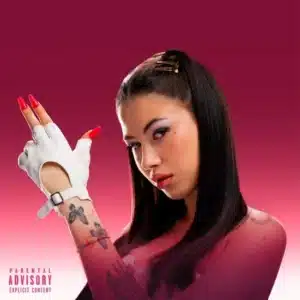
Released on 28 June 2024, Vera Baddie is Anna’s debut studio album. Across 18 tracks, she brings together rap, trap and club-oriented sounds in a record built around confident performances, catchy hooks and a strong sense of personality. After several years of successful singles and collaborations, the album gives her room to present a broader picture of herself, moving between celebration, ambition, relationships and moments of uncertainty.
Much of the record draws its energy from the contrast between Anna’s relaxed delivery and her more forceful verses. She can sound playful and conversational before switching to a sharper flow, keeping her voice at the centre of productions that range from heavy bass and electronic rhythms to more traditional hip-hop influences. “I Got It” highlights her rhythmic precision, while “30°C” brings a lighter, summery atmosphere and one of the album’s most immediate choruses.
The guest list places her alongside several generations of Italian rap. Guè appears on “Bikini,” Lazza joins her on “BBE,” and Sfera Ebbasta features on “Chica Italiana.” Elsewhere, Tony Boy and thasup contribute to “ABC,” while Artie 5ive trades verses with Anna on “I Love It.” These collaborations introduce different voices and styles without taking attention away from the artist leading the record.
Beneath the confident image, Vera Baddie also makes space for vulnerability. “Una tipa come me” offers a more personal perspective, revealing doubts and emotional needs behind the self-assured exterior. Those moments give the album greater depth: independence and success sit alongside the desire to be understood and to form sincere relationships.
The album reached number one in Italy and became a defining release in Anna’s rise. Its appeal rests on the combination of accessible songs and a clear grounding in rap, allowing her to reach a wide audience while developing the style that first brought her attention. More than a collection of potential hits, Vera Baddie establishes the musical personality at the centre of her career.
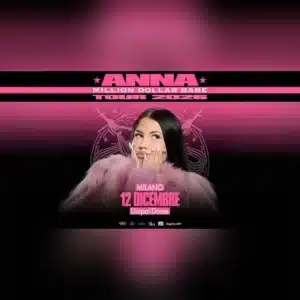
Released on 10 July 2026, Million Dollar Babe is Anna’s second studio album. Its 14 tracks expand her sound beyond the approach of Vera Baddie, bringing rap and trap into contact with dance-pop, electronic production and touches of reggaeton. Working closely with producer Miles, Anna creates a compact record that pairs energetic, club-ready songs with more personal reflections on relationships, self-worth and the pressures of success.
“White Girl Wasted,” released ahead of the album, introduces its more extroverted side through a driving dance beat, heavy bass and an immediate chorus. Tracks such as “Don’t Tell Nobody,” “Crystal Collo” and “U Like Me” continue that interest in electronic pop, drawing on sounds associated with the early 2000s. The shift gives the album a different character from her debut, with greater emphasis on dance rhythms and changes in texture.
Rap remains an essential part of the record. Lazza joins Anna on “Sono io il pass,” while Astro and Tony Boy appear on “Safari,” maintaining a connection with contemporary Italian trap. The smaller guest list leaves more space for Anna herself, allowing her delivery and personality to guide the album through its different styles. “Scontrosa,” featuring G.Mineiro, adds another direction by reworking the familiar melody of “Macarena” within the record’s playful atmosphere.
Alongside the party tracks, Anna explores the emotional complications behind her public image. “Cuore in off” reveals a more exposed side of her writing, moving from an orchestral opening towards electronic sounds. “Veleno” also contributes to the album’s more intimate perspective, while “Honey” pushes further into dance experimentation. These contrasts connect the record’s outward confidence with the uncertainty and vulnerability that can accompany it.
The title draws inspiration from the film Million Dollar Baby, reflecting Anna’s experience of finding her place in a predominantly male environment. That idea runs through an album concerned with personal value, determination and the difference between appearing successful and feeling secure. Million Dollar Babe presents an artist willing to broaden her musical range while making more room for the person behind the image.