


Tedua
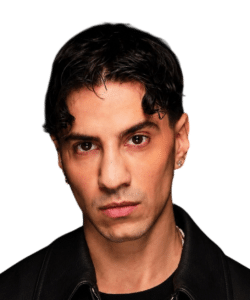
Artist: Tedua
Real Name: Mario Molinari
Born: 21 February 1994, Genoa
Roots: Cogoleto, Genoa Milan
Active since: 2006
Style: Hip-hop, trap and drill, combining an unconventional flow with autobiographical storytelling
Debut album: Orange County California (2017) ↗
Biography
Tedua is one of the most distinctive voices in contemporary rap, recognised for an unconventional flow, autobiographical writing and an ability to turn personal experiences into vivid stories. Born Mario Molinari in Genoa on 21 February 1994, he grew up between Milan and Liguria. These two environments shaped both his identity and his music: the city’s restless energy meets the friendships, landscapes and provincial life of the Ligurian coast.
His childhood was marked by family difficulties and periods in foster care. Having moved to Milan as a young child, he returned to Liguria during adolescence, living first in Arenzano and then in Cogoleto. There he formed friendships that would become central to his musical development. Alongside Izi, Vaz Tè, Guesan and Ill Rave, he became part of Wild Bandana, a collective built around shared experiences and a strong sense of belonging. His early recordings already revealed a loose, conversational delivery, with lines that stretched across the beat rather than following conventional patterns.
The mixtapes Aspettando Orange County and Orange County Mixtape introduced his world to a growing audience. Their titles drew inspiration from the television series The O.C., particularly the story of Ryan Atwood, whose troubled background and arrival in an unfamiliar environment resonated with Tedua’s own experiences. This connection became a recurring part of his artistic identity, giving him a framework through which to explore displacement, friendship and the search for a place to belong.
His debut studio album, Orange County California, arrived in 2017. Songs such as “Buste Della Spesa”, “Pugile” and “Lingerie”, featuring Sfera Ebbasta, brought his storytelling to a wider public. Rather than presenting a polished account of success, the record followed the uncertainty and ambition of a young artist still finding his way. Its combination of everyday detail, emotional openness and irregular rhythms helped distinguish him within the emerging trap scene.
With Mowgli in 2018, Tedua developed a more cohesive musical world alongside producer Chris Nolan. The jungle became a metaphor for growing up, learning to survive and understanding the rules of an often hostile environment. Tracks including “La legge del più forte”, “Sangue misto” and “Vertigini” balanced determination with vulnerability. His delivery remained unpredictable, but the songs showed a growing command of melody and structure, strengthening his position among the leading artists of his generation.
In 2020, Vita Vera Mixtape and its expanded edition, Vita Vera – Mixtape, aspettando la Divina Commedia, brought together different sides of his music. The project moved between personal reflections and collaborative tracks, including “La Story Infinita” with Massimo Pericolo, “Rari” with Paky and Shiva, and “Rap City” with Gemitaiz and MadMan. The seven-track EP Don’t Panic followed in 2021, placing greater emphasis on drill rhythms and tightly focused performances.
La Divina Commedia, released in 2023, marked a major expansion of his ambitions. Drawing on Dante’s imagery, Tedua used the journey through darkness towards greater understanding as a way to examine his own life. The album brought together forceful rap, melodic passages and more intimate songwriting, with contributions from artists including Marracash, Guè, Salmo, Geolier and Lazza. Its success established him with an even broader audience, while the 2024 deluxe edition extended the project with a further chapter centred on the idea of paradise.
In 2026, Tedua returned to the imagery of his early career with RYAN TED, a mixtape that revisited The O.C. from a more experienced perspective. Collaborations with Anna and Ernia sat alongside reflections on ambition, relationships and the distance travelled since his beginnings. That June, his first headline concert at Milan’s San Siro stadium marked another milestone. Across these different stages, the thread connecting his work remains the same: a restless, recognisable voice using personal history to explore belonging, survival and change.
Albums

Orange County California, released in 2017, is Tedua’s debut studio album, bringing the world of his early mixtapes into a more structured project. Its title references the television series The O.C., whose central character, Ryan Atwood, offered a point of identification for the rapper: a young outsider carrying a difficult past into an unfamiliar environment. For Tedua, that imagery becomes a way to explore his upbringing between Milan and Liguria, the importance of friendship and the ambition to build a different future.
The album captures an artist developing a highly individual approach to rhythm. Tedua’s lines often spill across the beat, following the movement of a thought or a memory rather than settling into a predictable pattern. His delivery can sound spontaneous and conversational, but it gives the songs a distinctive character. The production combines trap foundations with atmospheric and melodic passages, leaving room for both energetic performances and more reflective moments.
“Buste Della Spesa” and “Pugile” express the determination running through the record, connecting everyday pressures with the desire to move forward. “Lingerie”, featuring Sfera Ebbasta, brings a more immediate melodic appeal, while tracks such as “Lezione”, “Telefonate” and “Pensa Se Piove – Rmx” reveal the personal observations beneath the confidence. Throughout the album, relationships and memories remain as important as ambition.
Contributions from Izi, Rkomi, Ghali, Bresh and Laïoung place the project within the network of friendships and collaborations surrounding Tedua’s rise. These appearances give the record a communal feel while allowing his voice to remain its centre. Orange County California established the foundations of his later work: autobiographical storytelling, an unconventional flow and a recurring search for belonging.
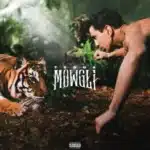
Mowgli, released in 2018, is Tedua’s second studio album, developed in close collaboration with producer Chris Nolan. Taking its name from the protagonist of The Jungle Book, the record uses the jungle as a metaphor for growing up in an environment where survival depends on instinct, adaptability and knowing whom to trust. That imagery connects with Tedua’s own experiences, giving the album a framework for exploring independence, friendship and the search for belonging.
Chris Nolan’s production gives the project a consistent atmosphere, combining deep bass, intricate percussion and spacious melodies. Within that setting, Tedua develops the unconventional delivery introduced on his earlier releases. His phrases accelerate, pause and spill across the beat, often sounding like thoughts taking shape as he speaks. The contrast between this restless flow and the more measured production gives the album much of its character.
“La legge del più forte” expresses the record’s central concern with strength and survival, while “Sangue misto” introduces its world with confidence and urgency. “Vertigini” and “Acqua (Malpensandoti)” reveal a more vulnerable side, bringing relationships and emotional uncertainty into the picture. Elsewhere, “Burnout” and “Fashion Week” add energy and swagger, balancing the reflective passages without breaking the album’s atmosphere.
The main tracklist keeps the focus on Tedua and Chris Nolan, allowing their partnership to define the record. Across its changing moods, strength emerges as something more complicated than dominance: it also means coping with insecurity, protecting important relationships and finding a direction through uncertainty. Mowgli develops the autobiographical foundations of Orange County California into a more cohesive project, establishing Tedua’s ability to sustain a distinctive voice across an entire album.
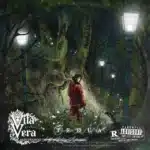
Vita Vera – Mixtape, aspettando la Divina Commedia, released in June 2020, is the expanded edition of Vita Vera Mixtape, a 12-track release that appeared a week earlier. That original project included “Lo Sai”, “Vita Vera”, “Polvere” and “Party HH”, combining autobiographical reflections with collaborative tracks about friendship, ambition and the people around Tedua. The expanded edition adds ten songs, bringing the total to 22 across two discs. Its subtitle looks ahead to his next studio album, La Divina Commedia, while the additional material develops the personal storytelling and collective energy of the original release.
Chris Nolan remains a central presence in the production, alongside contributions from Sick Luke, SHUNE and other collaborators. The music moves between forceful trap rhythms, atmospheric melodies and quieter passages, giving Tedua room to vary his delivery. His flow retains its restless, conversational quality, with phrases that stretch across the beat and shift direction unexpectedly. Memories, relationships, loyalty and ambition connect the different moods of the project.
The additional tracks open with “La Story Infinita”, featuring Massimo Pericolo, pairing two distinctive approaches to autobiographical rap. “Rari”, with Paky and Shiva, brings a harder edge, while “Rap City” places Tedua alongside Gemitaiz and MadMan for a meeting built around contrasting flows and technical confidence. These collaborations broaden the sound without displacing Tedua’s personality.
The original mixtape material remains an important part of the expanded edition. “Polvere”, featuring Capo Plaza, and “Party HH”, with Lazza, sit alongside more reflective tracks such as “Lo-fi Wuhan”. “Bro II”, featuring Ernia, adds another connection to the network of artists surrounding the project. Across its two discs, the mixtape combines the freedom of a collaborative release with the personal concerns that run through Tedua’s albums, making it a substantial chapter in his development.
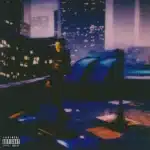
Don’t Panic, released in 2021, is a compact seven-track project that keeps Tedua’s music moving towards the world of La Divina Commedia. Although commonly classified as an EP, Tedua presented it as a collection of freestyle verses rather than a conventional EP or mixtape. Running for approximately eleven minutes, it concentrates on short, direct performances, giving the release the intensity of a continuous burst of ideas.
The production comes from Chris Nolan, Sick Luke, Garelli and SHUNE, with drill rhythms providing the main foundation. Deep bass and tense, sparse arrangements leave Tedua’s voice at the centre. His delivery shifts between rapid passages, sudden pauses and phrases that stretch across the beat, bringing his distinctive rhythmic approach into a particularly concentrated setting. There are no guest rappers, allowing his performances to carry the entire project.
“Inferno” establishes the dark atmosphere, followed by “Badman”, “Paris”, “Corvi” and “Urla”. The closing sequence of “Gironi” and “Lo-fi Drill” reinforces the connection between the music’s restless energy and its imagery of descent. The accompanying videos develop this idea through a contemporary vision of Dante’s world, moving through a burning city, empty spaces and an abandoned amusement park towards the dark forest. These settings give the collection a visual continuity beyond its brief individual tracks.
Following the extensive collaborations of Vita Vera – Mixtape, aspettando la Divina Commedia, this release brings the focus back to Tedua’s voice and writing. Its short format leaves little room for extended hooks or elaborate song structures, favouring momentum and changes of flow. Don’t Panic forms a concentrated intermediate chapter in his discography, developing the darker imagery that would become central to La Divina Commedia while keeping the spontaneity of a freestyle project.
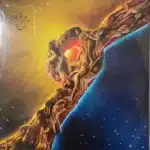
La Divina Commedia, released on 2 June 2023, is Tedua’s third studio album and the culmination of a journey anticipated through his earlier releases. Drawing on Dante’s imagery, it turns the passage through Hell and Purgatory into a framework for examining childhood trauma, ambition, relationships and the consequences of success. The literary reference gives the project its structure, but the experiences at its centre remain personal: Tedua looks back at where he came from while questioning the person he has become.
The production broadens his sound, bringing atmospheric arrangements, melodic hooks and moments of restraint into contact with the forceful rap performances of his previous work. His distinctive flow remains central, but there is greater space for singing and more direct emotional expression. “Malamente”, “Soffierà” and “Lo-fi For U” reveal this intimate side, while “Bagagli (Improvvisazione)” gives the closing stretch a particularly exposed, reflective quality. Across these songs, the journey becomes as much about understanding emotional wounds as overcoming external obstacles.
The collaborations introduce different voices into that journey. “Paradiso Artificiale”, featuring Baby Gang and Kid Yugi, establishes an uneasy relationship between escape and excess. “Hoe”, with Sfera Ebbasta, brings a sharper trap energy, while “Angelo All’Inferno”, featuring Salmo and Federica Abbate, combines intensity with a melodic refrain. “Mancanze Affettive”, with Geolier, places emotional deprivation at the centre of the conversation.
“Volgare”, featuring Lazza, and “Scala Di Milano”, with Guè, add contrasting displays of confidence, while “Diluvio A Luglio”, featuring Marracash, returns to a more introspective register. These changes of tone give the album a broad emotional range without losing its autobiographical focus. The original sequence ends with “Outro Purgatorio”, leaving the journey open; the 2024 deluxe edition would extend it towards Paradise. As a complete statement, La Divina Commedia brings Tedua’s storytelling into a more ambitious musical setting, connecting his personal history with questions of guilt, belonging and the possibility of change.
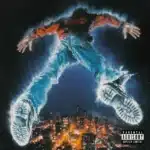
RYAN TED, released in 2026, is a 16-track mixtape that reconnects Tedua with the imagery of his early career. Its title returns to Ryan Atwood, the protagonist of The O.C., whose experiences of displacement and adaptation helped shape the world of Orange County California. This time, Tedua revisits that connection with years of success and personal change behind him, bringing his earlier ambitions into conversation with the life he has built.
Following the elaborate concept of La Divina Commedia, the mixtape gives him room for shorter, direct performances and changes of mood. “Rap Leggenda” opens the project with a statement of intent, while “Ryan Ted Freestyle” reinforces its connection to the freedom of his earlier recordings. His distinctive delivery remains central, moving between conversational passages, sudden accelerations and melodic phrases. Confidence and self-examination sit close together throughout the record.
The collaborations introduce different textures without overwhelming the project. “Felpa Nera”, featuring Anna, and “Hoola Hop”, with Ernia, bring contrasting voices from his wider musical circle. Nerissima Serpe appears on “Uno+Gangsta”, Sayf joins him on “Giovane e Bello”, and Latrelle contributes to both “FaXXX” and “Gravità”. Alongside these exchanges, solo tracks such as “Mai”, “Blue” and “Veliero di Carta” keep the focus on Tedua’s own voice.
The closing tracks, “Chuniri” and “Lettera a Tedua”, connect the project’s outward confidence with its more personal perspective. Across the mixtape, returning to an earlier character becomes a way of measuring change: the outsider’s viewpoint remains, even as the circumstances around him have transformed. RYAN TED revisits the friendships, aspirations and cultural references of Tedua’s beginnings while carrying forward the broader musical range developed through his later albums.
Tedua
Artist: Tedua
Real Name: Mario Molinari
Born: 21 February 1994, Genoa
Roots: Cogoleto, Genoa Milan
Active since: 2006
Style: Hip-hop, trap and drill, combining an unconventional flow with autobiographical storytelling
Debut album: Orange County California (2017) ↗
Biography
Tedua is one of the most distinctive voices in contemporary rap, recognised for an unconventional flow, autobiographical writing and an ability to turn personal experiences into vivid stories. Born Mario Molinari in Genoa on 21 February 1994, he grew up between Milan and Liguria. These two environments shaped both his identity and his music: the city’s restless energy meets the friendships, landscapes and provincial life of the Ligurian coast.
His childhood was marked by family difficulties and periods in foster care. Having moved to Milan as a young child, he returned to Liguria during adolescence, living first in Arenzano and then in Cogoleto. There he formed friendships that would become central to his musical development. Alongside Izi, Vaz Tè, Guesan and Ill Rave, he became part of Wild Bandana, a collective built around shared experiences and a strong sense of belonging. His early recordings already revealed a loose, conversational delivery, with lines that stretched across the beat rather than following conventional patterns.
The mixtapes Aspettando Orange County and Orange County Mixtape introduced his world to a growing audience. Their titles drew inspiration from the television series The O.C., particularly the story of Ryan Atwood, whose troubled background and arrival in an unfamiliar environment resonated with Tedua’s own experiences. This connection became a recurring part of his artistic identity, giving him a framework through which to explore displacement, friendship and the search for a place to belong.
His debut studio album, Orange County California, arrived in 2017. Songs such as “Buste Della Spesa”, “Pugile” and “Lingerie”, featuring Sfera Ebbasta, brought his storytelling to a wider public. Rather than presenting a polished account of success, the record followed the uncertainty and ambition of a young artist still finding his way. Its combination of everyday detail, emotional openness and irregular rhythms helped distinguish him within the emerging trap scene.
With Mowgli in 2018, Tedua developed a more cohesive musical world alongside producer Chris Nolan. The jungle became a metaphor for growing up, learning to survive and understanding the rules of an often hostile environment. Tracks including “La legge del più forte”, “Sangue misto” and “Vertigini” balanced determination with vulnerability. His delivery remained unpredictable, but the songs showed a growing command of melody and structure, strengthening his position among the leading artists of his generation.
In 2020, Vita Vera Mixtape and its expanded edition, Vita Vera – Mixtape, aspettando la Divina Commedia, brought together different sides of his music. The project moved between personal reflections and collaborative tracks, including “La Story Infinita” with Massimo Pericolo, “Rari” with Paky and Shiva, and “Rap City” with Gemitaiz and MadMan. The seven-track EP Don’t Panic followed in 2021, placing greater emphasis on drill rhythms and tightly focused performances.
La Divina Commedia, released in 2023, marked a major expansion of his ambitions. Drawing on Dante’s imagery, Tedua used the journey through darkness towards greater understanding as a way to examine his own life. The album brought together forceful rap, melodic passages and more intimate songwriting, with contributions from artists including Marracash, Guè, Salmo, Geolier and Lazza. Its success established him with an even broader audience, while the 2024 deluxe edition extended the project with a further chapter centred on the idea of paradise.
In 2026, Tedua returned to the imagery of his early career with RYAN TED, a mixtape that revisited The O.C. from a more experienced perspective. Collaborations with Anna and Ernia sat alongside reflections on ambition, relationships and the distance travelled since his beginnings. That June, his first headline concert at Milan’s San Siro stadium marked another milestone. Across these different stages, the thread connecting his work remains the same: a restless, recognisable voice using personal history to explore belonging, survival and change.
Albums

Orange County California, released in 2017, is Tedua’s debut studio album, bringing the world of his early mixtapes into a more structured project. Its title references the television series The O.C., whose central character, Ryan Atwood, offered a point of identification for the rapper: a young outsider carrying a difficult past into an unfamiliar environment. For Tedua, that imagery becomes a way to explore his upbringing between Milan and Liguria, the importance of friendship and the ambition to build a different future.
The album captures an artist developing a highly individual approach to rhythm. Tedua’s lines often spill across the beat, following the movement of a thought or a memory rather than settling into a predictable pattern. His delivery can sound spontaneous and conversational, but it gives the songs a distinctive character. The production combines trap foundations with atmospheric and melodic passages, leaving room for both energetic performances and more reflective moments.
“Buste Della Spesa” and “Pugile” express the determination running through the record, connecting everyday pressures with the desire to move forward. “Lingerie”, featuring Sfera Ebbasta, brings a more immediate melodic appeal, while tracks such as “Lezione”, “Telefonate” and “Pensa Se Piove – Rmx” reveal the personal observations beneath the confidence. Throughout the album, relationships and memories remain as important as ambition.
Contributions from Izi, Rkomi, Ghali, Bresh and Laïoung place the project within the network of friendships and collaborations surrounding Tedua’s rise. These appearances give the record a communal feel while allowing his voice to remain its centre. Orange County California established the foundations of his later work: autobiographical storytelling, an unconventional flow and a recurring search for belonging.
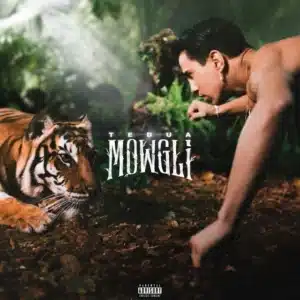
Mowgli, released in 2018, is Tedua’s second studio album, developed in close collaboration with producer Chris Nolan. Taking its name from the protagonist of The Jungle Book, the record uses the jungle as a metaphor for growing up in an environment where survival depends on instinct, adaptability and knowing whom to trust. That imagery connects with Tedua’s own experiences, giving the album a framework for exploring independence, friendship and the search for belonging.
Chris Nolan’s production gives the project a consistent atmosphere, combining deep bass, intricate percussion and spacious melodies. Within that setting, Tedua develops the unconventional delivery introduced on his earlier releases. His phrases accelerate, pause and spill across the beat, often sounding like thoughts taking shape as he speaks. The contrast between this restless flow and the more measured production gives the album much of its character.
“La legge del più forte” expresses the record’s central concern with strength and survival, while “Sangue misto” introduces its world with confidence and urgency. “Vertigini” and “Acqua (Malpensandoti)” reveal a more vulnerable side, bringing relationships and emotional uncertainty into the picture. Elsewhere, “Burnout” and “Fashion Week” add energy and swagger, balancing the reflective passages without breaking the album’s atmosphere.
The main tracklist keeps the focus on Tedua and Chris Nolan, allowing their partnership to define the record. Across its changing moods, strength emerges as something more complicated than dominance: it also means coping with insecurity, protecting important relationships and finding a direction through uncertainty. Mowgli develops the autobiographical foundations of Orange County California into a more cohesive project, establishing Tedua’s ability to sustain a distinctive voice across an entire album.
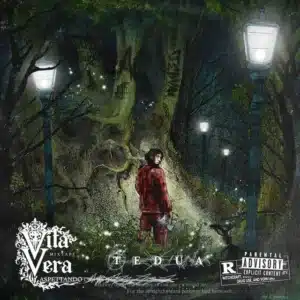
Vita Vera – Mixtape, aspettando la Divina Commedia, released in June 2020, is the expanded edition of Vita Vera Mixtape, a 12-track release that appeared a week earlier. That original project included “Lo Sai”, “Vita Vera”, “Polvere” and “Party HH”, combining autobiographical reflections with collaborative tracks about friendship, ambition and the people around Tedua. The expanded edition adds ten songs, bringing the total to 22 across two discs. Its subtitle looks ahead to his next studio album, La Divina Commedia, while the additional material develops the personal storytelling and collective energy of the original release.
Chris Nolan remains a central presence in the production, alongside contributions from Sick Luke, SHUNE and other collaborators. The music moves between forceful trap rhythms, atmospheric melodies and quieter passages, giving Tedua room to vary his delivery. His flow retains its restless, conversational quality, with phrases that stretch across the beat and shift direction unexpectedly. Memories, relationships, loyalty and ambition connect the different moods of the project.
The additional tracks open with “La Story Infinita”, featuring Massimo Pericolo, pairing two distinctive approaches to autobiographical rap. “Rari”, with Paky and Shiva, brings a harder edge, while “Rap City” places Tedua alongside Gemitaiz and MadMan for a meeting built around contrasting flows and technical confidence. These collaborations broaden the sound without displacing Tedua’s personality.
The original mixtape material remains an important part of the expanded edition. “Polvere”, featuring Capo Plaza, and “Party HH”, with Lazza, sit alongside more reflective tracks such as “Lo-fi Wuhan”. “Bro II”, featuring Ernia, adds another connection to the network of artists surrounding the project. Across its two discs, the mixtape combines the freedom of a collaborative release with the personal concerns that run through Tedua’s albums, making it a substantial chapter in his development.
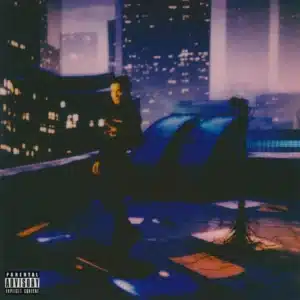
Don’t Panic, released in 2021, is a compact seven-track project that keeps Tedua’s music moving towards the world of La Divina Commedia. Although commonly classified as an EP, Tedua presented it as a collection of freestyle verses rather than a conventional EP or mixtape. Running for approximately eleven minutes, it concentrates on short, direct performances, giving the release the intensity of a continuous burst of ideas.
The production comes from Chris Nolan, Sick Luke, Garelli and SHUNE, with drill rhythms providing the main foundation. Deep bass and tense, sparse arrangements leave Tedua’s voice at the centre. His delivery shifts between rapid passages, sudden pauses and phrases that stretch across the beat, bringing his distinctive rhythmic approach into a particularly concentrated setting. There are no guest rappers, allowing his performances to carry the entire project.
“Inferno” establishes the dark atmosphere, followed by “Badman”, “Paris”, “Corvi” and “Urla”. The closing sequence of “Gironi” and “Lo-fi Drill” reinforces the connection between the music’s restless energy and its imagery of descent. The accompanying videos develop this idea through a contemporary vision of Dante’s world, moving through a burning city, empty spaces and an abandoned amusement park towards the dark forest. These settings give the collection a visual continuity beyond its brief individual tracks.
Following the extensive collaborations of Vita Vera – Mixtape, aspettando la Divina Commedia, this release brings the focus back to Tedua’s voice and writing. Its short format leaves little room for extended hooks or elaborate song structures, favouring momentum and changes of flow. Don’t Panic forms a concentrated intermediate chapter in his discography, developing the darker imagery that would become central to La Divina Commedia while keeping the spontaneity of a freestyle project.
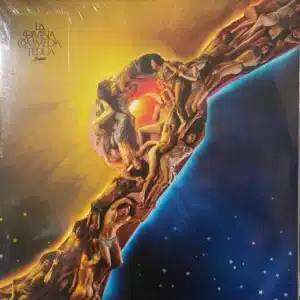
La Divina Commedia, released on 2 June 2023, is Tedua’s third studio album and the culmination of a journey anticipated through his earlier releases. Drawing on Dante’s imagery, it turns the passage through Hell and Purgatory into a framework for examining childhood trauma, ambition, relationships and the consequences of success. The literary reference gives the project its structure, but the experiences at its centre remain personal: Tedua looks back at where he came from while questioning the person he has become.
The production broadens his sound, bringing atmospheric arrangements, melodic hooks and moments of restraint into contact with the forceful rap performances of his previous work. His distinctive flow remains central, but there is greater space for singing and more direct emotional expression. “Malamente”, “Soffierà” and “Lo-fi For U” reveal this intimate side, while “Bagagli (Improvvisazione)” gives the closing stretch a particularly exposed, reflective quality. Across these songs, the journey becomes as much about understanding emotional wounds as overcoming external obstacles.
The collaborations introduce different voices into that journey. “Paradiso Artificiale”, featuring Baby Gang and Kid Yugi, establishes an uneasy relationship between escape and excess. “Hoe”, with Sfera Ebbasta, brings a sharper trap energy, while “Angelo All’Inferno”, featuring Salmo and Federica Abbate, combines intensity with a melodic refrain. “Mancanze Affettive”, with Geolier, places emotional deprivation at the centre of the conversation.
“Volgare”, featuring Lazza, and “Scala Di Milano”, with Guè, add contrasting displays of confidence, while “Diluvio A Luglio”, featuring Marracash, returns to a more introspective register. These changes of tone give the album a broad emotional range without losing its autobiographical focus. The original sequence ends with “Outro Purgatorio”, leaving the journey open; the 2024 deluxe edition would extend it towards Paradise. As a complete statement, La Divina Commedia brings Tedua’s storytelling into a more ambitious musical setting, connecting his personal history with questions of guilt, belonging and the possibility of change.
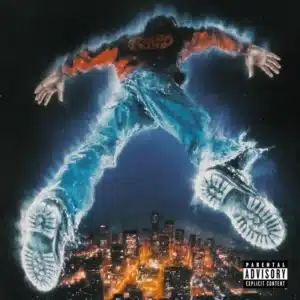
RYAN TED, released in 2026, is a 16-track mixtape that reconnects Tedua with the imagery of his early career. Its title returns to Ryan Atwood, the protagonist of The O.C., whose experiences of displacement and adaptation helped shape the world of Orange County California. This time, Tedua revisits that connection with years of success and personal change behind him, bringing his earlier ambitions into conversation with the life he has built.
Following the elaborate concept of La Divina Commedia, the mixtape gives him room for shorter, direct performances and changes of mood. “Rap Leggenda” opens the project with a statement of intent, while “Ryan Ted Freestyle” reinforces its connection to the freedom of his earlier recordings. His distinctive delivery remains central, moving between conversational passages, sudden accelerations and melodic phrases. Confidence and self-examination sit close together throughout the record.
The collaborations introduce different textures without overwhelming the project. “Felpa Nera”, featuring Anna, and “Hoola Hop”, with Ernia, bring contrasting voices from his wider musical circle. Nerissima Serpe appears on “Uno+Gangsta”, Sayf joins him on “Giovane e Bello”, and Latrelle contributes to both “FaXXX” and “Gravità”. Alongside these exchanges, solo tracks such as “Mai”, “Blue” and “Veliero di Carta” keep the focus on Tedua’s own voice.
The closing tracks, “Chuniri” and “Lettera a Tedua”, connect the project’s outward confidence with its more personal perspective. Across the mixtape, returning to an earlier character becomes a way of measuring change: the outsider’s viewpoint remains, even as the circumstances around him have transformed. RYAN TED revisits the friendships, aspirations and cultural references of Tedua’s beginnings while carrying forward the broader musical range developed through his later albums.