


Marracash

Artist: Marracash
Real Name: Fabio Bartolo Rizzo
Born: 22 May 1979, Nicosia, Sicily
Roots: Barona, Milan
Active since: 1999
Style: Italian hip-hop, introspective rap and social commentary
Debut album: Marracash (2008) ↗
Biography
Marracash is one of the defining voices of Italian hip-hop, known for combining technical precision with sharp social observation and an unusually candid examination of his own life. Born Fabio Bartolo Rizzo in Nicosia, Sicily, on 22 May 1979, he grew up in Milan’s Barona neighbourhood. His Sicilian origins and upbringing in the Milanese suburbs shaped a perspective rooted in class, belonging and the struggle to move beyond the circumstances into which you are born. Barona became a foundation of his artistic identity, supplying both the setting for his stories and the experiences behind his view of the world.
His earliest recordings date back to 1999, when he performed under the name Juza delle Nuvole. He later became associated with Dogo Gang, the Milanese collective whose circle included Guè and Jake La Furia. Working within that scene helped him develop his craft in an environment where distinctive personalities, lyrical ability and credibility mattered. His underground reputation grew through recordings and collaborations before his solo breakthrough in 2008 brought him to a much wider audience. That background remains important to understanding his music: even as his audience expanded, his writing retained the directness and competitive spirit of his early years.
As a rapper, Marracash is recognised for the control and detail of his writing. His verses combine intricate rhymes with conversational language, cultural references and observations that can turn an everyday situation into a broader argument. Humour is an important part of that approach. A cutting joke or an unexpected comparison can carry as much weight as an openly serious statement, allowing him to move between entertainment and criticism without making the two feel separate. His delivery gives those words a firm presence, whether he is asserting himself, telling a story or exposing a weakness.
Much of his music revolves around contradiction. He understands the attraction of money, status and recognition, but repeatedly questions what they offer once you have them. Confidence sits beside self-doubt; ambition beside exhaustion; pride beside the fear of being misunderstood. Rather than presenting success as a neat resolution to earlier struggles, he often treats it as the beginning of a different set of problems. This gives his work a perspective that reaches beyond the familiar story of escaping hardship and arriving at fame.
His willingness to examine vulnerability is another defining feature. Relationships, loneliness, emotional pressure and the distance between a public image and private experience have become central subjects in his writing. He can be uncompromising towards others while applying the same scrutiny to himself. That makes his reflective songs compelling: the voice remains recognisably forceful, but it leaves room for uncertainty, uncomfortable admissions and questions without easy answers.
Alongside that personal dimension, Marracash pays close attention to the society around him. His lyrics explore social divisions, consumer culture, appearances and the ways people measure their own worth against other people. The neighbourhood perspective of his early work develops into a wider examination of identity and opportunity, while retaining an awareness of how class shapes everyday experience. His criticism often works through concrete situations and recognisable behaviour, giving larger themes a human scale.
Collaboration has also played an important role in his career. His longstanding connection with Guè is particularly significant, linking two artists who share roots in the Milanese scene while bringing different qualities to their music. More broadly, Marracash’s collaborations extend across generations and beyond rap, reflecting an ability to work with different voices while retaining his own character. His place in Italian music rests partly on that balance: he remains closely connected to hip-hop’s traditions while reaching listeners outside its original audience.
His standing as a writer received a major acknowledgement in 2022, when he won the Targa Tenco for best album. His later move into stadium performances demonstrated the breadth of his audience and the scale his career had reached. These milestones reflect two sides of his appeal: the attention given to his lyrics and the strength of his connection with a large public.
For listeners discovering Italian rap, Marracash offers both its verbal energy and its capacity for reflection. His work can be confrontational, funny, bitter or intimate, sometimes shifting between those moods within a single verse. The thread connecting them is a persistent interest in what lies beneath appearances—how people see themselves, what they want others to see, and what happens when those versions no longer agree. That combination of skill, personality and emotional depth has made him a central figure in the genre.
Albums

Released on 13 June 2008 through Universal Music, Marracash is his debut studio album. It combines street storytelling with personal reflection, introducing a rapper whose sharp observations and direct delivery would become central to his work. Behind the confidence and humour, the record explores the pressures, frustrations and ambitions of everyday life, giving his songs a perspective rooted in experience.
“Badabum Cha Cha” brought him to a wider audience through radio and music television, becoming the album’s most recognisable introduction. Its catchy refrain offered an accessible route into his music, but the record reaches beyond its breakthrough single. Harder rap tracks sit alongside more reflective moments, revealing a personality that balances swagger with vulnerability and biting humour with serious concerns.
Production from Don Joe and Deleterio connects the album to the sound of Milan’s Dogo Gang scene. Their beats provide the foundation for Marracash’s forceful verses while allowing room for changes in mood and pace. The record maintains a strong hip-hop identity, with his voice and writing at the centre.
The guest appearances also reflect his connections within Italian rap. Guè and J-Ax join him on “Fattore Wow”, while Jake La Furia and Vincenzo da Via Anfossi appear on “Quello Che Deve Arrivare (Arriva Arriva)”. Neapolitan duo Co’Sang contribute to “Triste Ma Vero”, extending the album’s collaborations beyond Milan.
As a debut, Marracash introduces more than a confident performer with a successful single. It captures the early combination of storytelling, wit and introspection that would develop further on later releases, making it a useful starting point for listeners discovering his catalogue.

Released on 13 July 2010 through Universal Music, Fino a qui tutto bene is Marracash’s second studio album. Following the breakthrough of his self-titled debut, it presents a more personal approach to his music, giving greater space to his thoughts, doubts and observations while retaining the sharp delivery and humour of his earlier work.
The title references the French film La Haine. Its apparent reassurance carries an underlying sense of uncertainty, fitting a record that looks beyond outward confidence. Marracash’s writing moves between ambition, frustration and self-examination, exploring the tension between finding success and feeling satisfied with where life is heading.
Musically, the album broadens his sound. Alongside established collaborators Don Joe and Deleterio, production contributions from Crookers and The Bloody Beetroots introduce electronic influences. These give parts of the record a more restless, energetic character, allowing him to explore different settings for his verses without losing his identity as a rapper.
“Stupido” introduced the album with a provocative edge, while “Stupidi” pairs him with Fabri Fibra for an alternative version. “Rivincita”, featuring Giusy Ferreri, offers a different balance: her distinctive singing contrasts with Marracash’s verses, bringing a stronger melodic element to the record. The two collaborations demonstrate how he can adapt his delivery while keeping his personality at the centre.
Other tracks, including “Parole Chiave”, “Continuavano A Chiamarlo Marracash (Il Divo)” and the title song, contribute to an album concerned with establishing an individual voice. Rather than simply repeating the formula of his debut, Fino a qui tutto bene captures Marracash expanding his musical range and developing the more introspective writing that would become an increasingly important part of his catalogue.

Released on 31 October 2011 through Universal Music, King del Rap is Marracash’s third studio album. Its title sets out a bold claim, and the record places his lyrical ability firmly at the centre: forceful delivery, intricate rhymes and sharp punchlines combine with the humour and personal reflection already present in his earlier work.
The opening title track establishes the album’s competitive spirit. Marracash approaches rap as both a craft and a contest, asserting his position while questioning the credibility of those around him. Across the record, that confidence is balanced by darker passages, giving the album more emotional range than its defiant title might suggest.
The collaborations bring together several generations and styles of Italian hip-hop. Fabri Fibra and Jake La Furia join him on “Quando Sarò Morto…”, while J-Ax appears on the companion track “…Quando Ero Vivo”. Guè contributes to “S.e.n.i.c.a.r.”, Co’Sang feature on “Noi No”, and Emis Killa joins him on “Giusto Un Giro”. These guests make the album a meeting point for established figures and artists building their reputations.
Salmo appears on both “Nè Cura Nè Luogo” and the closing “Marrageddon”, adding another distinctive voice to the record. Alongside these collaborations, solo tracks such as “Sabbie Mobili” and “In Down” provide space for Marracash’s more reflective side. The movement between confrontation and introspection helps sustain the album beyond its displays of technical skill.
Developed alongside Roccia Music II, which was included in the deluxe edition, King del Rap maintains a close connection to Marracash’s mixtape roots. It captures an artist determined to prove himself through the music, bringing together ambition, personality and a broad network of rap collaborators in a forceful statement of intent.

Released on 20 January 2015 through Universal Music, Status is Marracash’s fourth studio album, arriving more than three years after King del Rap. It brings together his competitive instincts and a growing interest in personal and social criticism, examining success, identity and the uneasy relationship between public recognition and private satisfaction.
The title invites questions about what gives someone importance: money, reputation, artistic achievement or the image presented to others. Across the album, Marracash moves between asserting his position and questioning the world that measures it. His writing combines sharp humour and confrontational verses with moments of doubt, making confidence and insecurity recurring companions.
The opening “Bruce Willis” and “Bentornato” announce his return, while songs such as “20 Anni (Peso)” and “Sindrome Depressiva Da Social Network” give the record a more reflective dimension. The latter turns its attention to online life and comparison, a subject that fits the album’s broader concern with appearances and self-worth. These passages balance the harder tracks and give the project a perspective beyond rap rivalry.
A wide range of guests adds variety without displacing Marracash’s voice. Fabri Fibra features on “Vita Da Star”, while Salmo and Coez join him on “A Volte Esagero”. Other collaborations include Achille Lauro on “Don”, Luchè on “Sushi & Cocaina” and Guè on “Di Nascosto”. More melodic moments come through “In Radio”, featuring Federica Abbate, “Senza Un Posto Nel Mondo” with Tiziano Ferro, and “Nella Macchina” with Neffa.
Status captures Marracash developing a broader emotional and thematic range while preserving the precision and force of his rap. Its mixture of ambition, dissatisfaction and social observation makes it an important step towards the increasingly introspective direction of his later work.
Released on 24 June 2016 through Universal Music, Santeria is the first full collaborative studio album by Marracash and Guè, then known as Guè Pequeno. After years of working together within the Dogo Gang circle and appearing on each other’s records, the two rappers built a project around their shared chemistry. Across its 15 tracks, their contrasting personalities become the album’s driving force.
Marracash’s analytical writing and biting observations meet Guè’s relaxed delivery, vivid imagery and taste for excess. Both bring humour, technical skill and competitive energy, but their exchanges also leave room for disappointment and vulnerability. The partnership works through the way they respond to each other, giving the record a consistent identity beyond its individual songs.
Conceived, written and recorded between Tenerife, Trancoso in Brazil and Milan, the album moves through a broad range of moods. “Nulla Accade” introduced the project, while “Money” and “Scooteroni” showcase its confident, playful side. Elsewhere, “Senza Dio” and “Maledetto Me” offer darker moments, balancing the swagger with a more troubled outlook.
“Insta Lova” explores attraction in the age of social media, bringing an accessible hook to the duo’s observations about modern relationships. Tracks such as “Quasi Amici” and “Film Senza Volume” further widen the emotional range. Throughout, the focus remains on Marracash and Guè, allowing their voices and the interplay between them to hold the album together.
Santeria stands as a substantial joint chapter in both artists’ catalogues. It turns a longstanding creative friendship into a complete album, combining memorable songs with the verbal exchanges that made their earlier collaborations distinctive. Its appeal lies as much in the partnership as in the individual performances: two established rappers with enough shared history to sound comfortable together, while still pushing each other.

Released on 31 October 2019 through Island Records, Persona is Marracash’s fifth solo studio album. It places the relationship between Fabio Rizzo, the private individual, and Marracash, the public artist, at the centre of its writing. Following a difficult period in his personal life, the record explores identity, emotional distress and the effort to understand himself beyond his reputation as a rapper.
The original album’s 15 tracks are each associated with a part of the human body. These connections give the project a clear structure: the brain, heart, nerves, skin and other organs become ways of examining different aspects of his personality and experience. Inspired by Ingmar Bergman’s film of the same name, the album uses this framework to explore the tension between the person and the image presented to the world.
“CRUDELIA – I nervi” examines a destructive relationship through an extended narrative, while “BRAVI A CADERE – I polmoni” brings vulnerability and resilience into focus. “NON SONO MARRA – La pelle”, featuring Mahmood, directly addresses the divide between the artist and the individual. Together, these songs give the album an emotional weight that extends beyond its more confrontational moments.
The collaborations are closely connected to the record’s themes. Guè appears on “QUALCOSA IN CUI CREDERE – Lo scheletro”, Coez on “QUELLI CHE NON PENSANO – Il cervello”, and Massimo Pericolo on “APPARTENGO – Il sangue”. Other guests include Luchè, Madame and Cosmo, while thasup and Sfera Ebbasta join Marracash on “SUPREME – L’ego”, bringing contrasting voices into the album’s examination of self.
Persona gives a cohesive shape to the introspection present in Marracash’s earlier work. Technical precision and sharp observations remain, but here they serve a sustained exploration of vulnerability, belonging and inner conflict. The result is a deeply personal record that offers listeners a fuller picture of the individual behind the artist.

Released on 19 November 2021 through Island Records, Noi, loro, gli altri is Marracash’s sixth solo studio album. Following the deeply personal exploration of Persona, it widens the focus to examine the individual’s place within society. Across 14 tracks, private struggles sit alongside questions of class, privilege, belonging and the divisions that shape everyday life.
The title suggests the groups through which people define themselves and those around them. Marracash questions these boundaries while acknowledging his own complicated position: an artist whose success has changed his circumstances without erasing his background. The writing moves between anger, affection and self-criticism, connecting personal experience to a broader social perspective.
The artwork extends this idea through three different covers. The main “Noi” image brings together people from his personal life, while the alternative “Loro” and “Gli altri” covers place him in different social settings. These photographs make the album’s central question visible: how much of someone’s identity comes from who they are, and how much from the people surrounding them?
Production from Marz and Zef gives the record a consistent musical foundation, while a small guest list leaves Marracash’s writing at the centre. Guè joins him on “∞ LOVE”, Blanco appears on “NEMESI”, and Calcutta contributes to “LAUREA AD HONOREM”. Each collaboration brings a different vocal character without disrupting the album’s overall direction.
Songs such as “LORO” sharpen its social criticism, while “CRAZY LOVE” brings intimate relationships into the same examination of conflict and attachment. The album’s strength lies in the connections between these subjects, showing how personal dissatisfaction and social pressures can feed into each other. In 2022, Noi, loro, gli altri received the Targa Tenco for best album, recognising a record that combines the force of rap with sustained, thoughtful songwriting.

Released without advance promotion on 13 December 2024 through Island Records, È finita la pace is Marracash’s seventh solo studio album. It completes the trilogy begun with Persona and continued with Noi, loro, gli altri, bringing his examination of identity and society towards a reckoning with himself. Across 13 tracks, he questions the habits, expectations and compromises that can keep someone trapped even when their life appears successful.
The title suggests a refusal to remain comfortable with unresolved conflicts. Marracash connects personal exhaustion with a wider sense of dissatisfaction, examining the pressure to perform, consume and present an acceptable version of oneself. His criticism also turns inward, giving the record the character of a self-examination rather than a series of accusations directed at others.
The cover’s transparent bubble offers a visual expression of this separation from the outside world. Inside it, apparent protection can also become isolation. That tension runs through the album’s concerns with freedom, authenticity and the difficulty of breaking away from familiar patterns. The writing continues his increasingly direct approach to vulnerability while retaining the precision, humour and force of his rap.
Created with producers Marz and Zef, with an additional contribution from Fritz da Cat, the album has no featured guest artists. This keeps Marracash’s voice at the centre throughout. Samples draw on a varied musical heritage, including Ivan Graziani, the Pooh, BLUEM and Puccini’s Madama Butterfly, bringing older and contemporary material into the record’s hip-hop setting.
Alongside its confrontational passages, the album leaves room for affection and a more hopeful understanding of personal freedom. “LEI”, for example, considers the qualities of an imagined partner rather than returning to the account of a destructive relationship heard on Persona. As the closing chapter of the trilogy, È finita la pace brings together inner conflict, social criticism and the search for self-acceptance in a focused statement from Marracash.
Marracash
Artist: Marracash
Real Name: Fabio Bartolo Rizzo
Born: 22 May 1979, Nicosia, Sicily
Roots: Barona, Milan
Active since: 1999
Style: Italian hip-hop, introspective rap and social commentary
Debut album: Marracash (2008) ↗
Biography
Marracash is one of the defining voices of Italian hip-hop, known for combining technical precision with sharp social observation and an unusually candid examination of his own life. Born Fabio Bartolo Rizzo in Nicosia, Sicily, on 22 May 1979, he grew up in Milan’s Barona neighbourhood. His Sicilian origins and upbringing in the Milanese suburbs shaped a perspective rooted in class, belonging and the struggle to move beyond the circumstances into which you are born. Barona became a foundation of his artistic identity, supplying both the setting for his stories and the experiences behind his view of the world.
His earliest recordings date back to 1999, when he performed under the name Juza delle Nuvole. He later became associated with Dogo Gang, the Milanese collective whose circle included Guè and Jake La Furia. Working within that scene helped him develop his craft in an environment where distinctive personalities, lyrical ability and credibility mattered. His underground reputation grew through recordings and collaborations before his solo breakthrough in 2008 brought him to a much wider audience. That background remains important to understanding his music: even as his audience expanded, his writing retained the directness and competitive spirit of his early years.
As a rapper, Marracash is recognised for the control and detail of his writing. His verses combine intricate rhymes with conversational language, cultural references and observations that can turn an everyday situation into a broader argument. Humour is an important part of that approach. A cutting joke or an unexpected comparison can carry as much weight as an openly serious statement, allowing him to move between entertainment and criticism without making the two feel separate. His delivery gives those words a firm presence, whether he is asserting himself, telling a story or exposing a weakness.
Much of his music revolves around contradiction. He understands the attraction of money, status and recognition, but repeatedly questions what they offer once you have them. Confidence sits beside self-doubt; ambition beside exhaustion; pride beside the fear of being misunderstood. Rather than presenting success as a neat resolution to earlier struggles, he often treats it as the beginning of a different set of problems. This gives his work a perspective that reaches beyond the familiar story of escaping hardship and arriving at fame.
His willingness to examine vulnerability is another defining feature. Relationships, loneliness, emotional pressure and the distance between a public image and private experience have become central subjects in his writing. He can be uncompromising towards others while applying the same scrutiny to himself. That makes his reflective songs compelling: the voice remains recognisably forceful, but it leaves room for uncertainty, uncomfortable admissions and questions without easy answers.
Alongside that personal dimension, Marracash pays close attention to the society around him. His lyrics explore social divisions, consumer culture, appearances and the ways people measure their own worth against other people. The neighbourhood perspective of his early work develops into a wider examination of identity and opportunity, while retaining an awareness of how class shapes everyday experience. His criticism often works through concrete situations and recognisable behaviour, giving larger themes a human scale.
Collaboration has also played an important role in his career. His longstanding connection with Guè is particularly significant, linking two artists who share roots in the Milanese scene while bringing different qualities to their music. More broadly, Marracash’s collaborations extend across generations and beyond rap, reflecting an ability to work with different voices while retaining his own character. His place in Italian music rests partly on that balance: he remains closely connected to hip-hop’s traditions while reaching listeners outside its original audience.
His standing as a writer received a major acknowledgement in 2022, when he won the Targa Tenco for best album. His later move into stadium performances demonstrated the breadth of his audience and the scale his career had reached. These milestones reflect two sides of his appeal: the attention given to his lyrics and the strength of his connection with a large public.
For listeners discovering Italian rap, Marracash offers both its verbal energy and its capacity for reflection. His work can be confrontational, funny, bitter or intimate, sometimes shifting between those moods within a single verse. The thread connecting them is a persistent interest in what lies beneath appearances—how people see themselves, what they want others to see, and what happens when those versions no longer agree. That combination of skill, personality and emotional depth has made him a central figure in the genre.
Albums
Released on 13 June 2008 through Universal Music, Marracash is his debut studio album. It combines street storytelling with personal reflection, introducing a rapper whose sharp observations and direct delivery would become central to his work. Behind the confidence and humour, the record explores the pressures, frustrations and ambitions of everyday life, giving his songs a perspective rooted in experience.
“Badabum Cha Cha” brought him to a wider audience through radio and music television, becoming the album’s most recognisable introduction. Its catchy refrain offered an accessible route into his music, but the record reaches beyond its breakthrough single. Harder rap tracks sit alongside more reflective moments, revealing a personality that balances swagger with vulnerability and biting humour with serious concerns.
Production from Don Joe and Deleterio connects the album to the sound of Milan’s Dogo Gang scene. Their beats provide the foundation for Marracash’s forceful verses while allowing room for changes in mood and pace. The record maintains a strong hip-hop identity, with his voice and writing at the centre.
The guest appearances also reflect his connections within Italian rap. Guè and J-Ax join him on “Fattore Wow”, while Jake La Furia and Vincenzo da Via Anfossi appear on “Quello Che Deve Arrivare (Arriva Arriva)”. Neapolitan duo Co’Sang contribute to “Triste Ma Vero”, extending the album’s collaborations beyond Milan.
As a debut, Marracash introduces more than a confident performer with a successful single. It captures the early combination of storytelling, wit and introspection that would develop further on later releases, making it a useful starting point for listeners discovering his catalogue.

Released on 13 July 2010 through Universal Music, Fino a qui tutto bene is Marracash’s second studio album. Following the breakthrough of his self-titled debut, it presents a more personal approach to his music, giving greater space to his thoughts, doubts and observations while retaining the sharp delivery and humour of his earlier work.
The title references the French film La Haine. Its apparent reassurance carries an underlying sense of uncertainty, fitting a record that looks beyond outward confidence. Marracash’s writing moves between ambition, frustration and self-examination, exploring the tension between finding success and feeling satisfied with where life is heading.
Musically, the album broadens his sound. Alongside established collaborators Don Joe and Deleterio, production contributions from Crookers and The Bloody Beetroots introduce electronic influences. These give parts of the record a more restless, energetic character, allowing him to explore different settings for his verses without losing his identity as a rapper.
“Stupido” introduced the album with a provocative edge, while “Stupidi” pairs him with Fabri Fibra for an alternative version. “Rivincita”, featuring Giusy Ferreri, offers a different balance: her distinctive singing contrasts with Marracash’s verses, bringing a stronger melodic element to the record. The two collaborations demonstrate how he can adapt his delivery while keeping his personality at the centre.
Other tracks, including “Parole Chiave”, “Continuavano A Chiamarlo Marracash (Il Divo)” and the title song, contribute to an album concerned with establishing an individual voice. Rather than simply repeating the formula of his debut, Fino a qui tutto bene captures Marracash expanding his musical range and developing the more introspective writing that would become an increasingly important part of his catalogue.

Released on 31 October 2011 through Universal Music, King del Rap is Marracash’s third studio album. Its title sets out a bold claim, and the record places his lyrical ability firmly at the centre: forceful delivery, intricate rhymes and sharp punchlines combine with the humour and personal reflection already present in his earlier work.
The opening title track establishes the album’s competitive spirit. Marracash approaches rap as both a craft and a contest, asserting his position while questioning the credibility of those around him. Across the record, that confidence is balanced by darker passages, giving the album more emotional range than its defiant title might suggest.
The collaborations bring together several generations and styles of Italian hip-hop. Fabri Fibra and Jake La Furia join him on “Quando Sarò Morto…”, while J-Ax appears on the companion track “…Quando Ero Vivo”. Guè contributes to “S.e.n.i.c.a.r.”, Co’Sang feature on “Noi No”, and Emis Killa joins him on “Giusto Un Giro”. These guests make the album a meeting point for established figures and artists building their reputations.
Salmo appears on both “Nè Cura Nè Luogo” and the closing “Marrageddon”, adding another distinctive voice to the record. Alongside these collaborations, solo tracks such as “Sabbie Mobili” and “In Down” provide space for Marracash’s more reflective side. The movement between confrontation and introspection helps sustain the album beyond its displays of technical skill.
Developed alongside Roccia Music II, which was included in the deluxe edition, King del Rap maintains a close connection to Marracash’s mixtape roots. It captures an artist determined to prove himself through the music, bringing together ambition, personality and a broad network of rap collaborators in a forceful statement of intent.
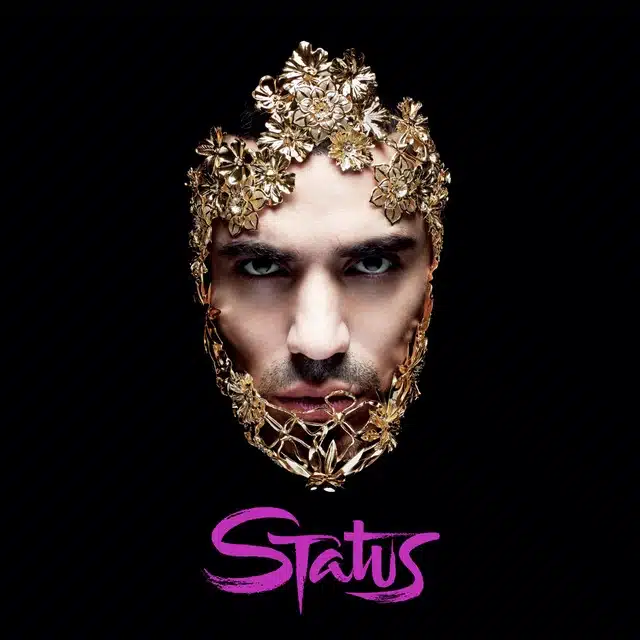
Released on 20 January 2015 through Universal Music, Status is Marracash’s fourth studio album, arriving more than three years after King del Rap. It brings together his competitive instincts and a growing interest in personal and social criticism, examining success, identity and the uneasy relationship between public recognition and private satisfaction.
The title invites questions about what gives someone importance: money, reputation, artistic achievement or the image presented to others. Across the album, Marracash moves between asserting his position and questioning the world that measures it. His writing combines sharp humour and confrontational verses with moments of doubt, making confidence and insecurity recurring companions.
The opening “Bruce Willis” and “Bentornato” announce his return, while songs such as “20 Anni (Peso)” and “Sindrome Depressiva Da Social Network” give the record a more reflective dimension. The latter turns its attention to online life and comparison, a subject that fits the album’s broader concern with appearances and self-worth. These passages balance the harder tracks and give the project a perspective beyond rap rivalry.
A wide range of guests adds variety without displacing Marracash’s voice. Fabri Fibra features on “Vita Da Star”, while Salmo and Coez join him on “A Volte Esagero”. Other collaborations include Achille Lauro on “Don”, Luchè on “Sushi & Cocaina” and Guè on “Di Nascosto”. More melodic moments come through “In Radio”, featuring Federica Abbate, “Senza Un Posto Nel Mondo” with Tiziano Ferro, and “Nella Macchina” with Neffa.
Status captures Marracash developing a broader emotional and thematic range while preserving the precision and force of his rap. Its mixture of ambition, dissatisfaction and social observation makes it an important step towards the increasingly introspective direction of his later work.
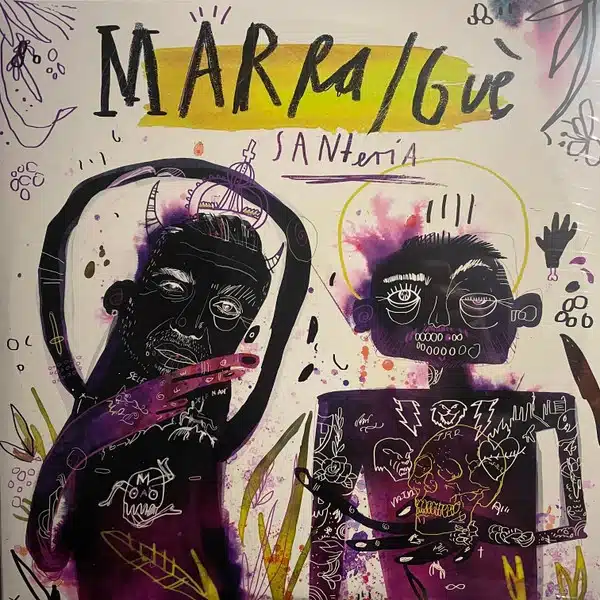
Released on 24 June 2016 through Universal Music, Santeria is the first full collaborative studio album by Marracash and Guè, then known as Guè Pequeno. After years of working together within the Dogo Gang circle and appearing on each other’s records, the two rappers built a project around their shared chemistry. Across its 15 tracks, their contrasting personalities become the album’s driving force.
Marracash’s analytical writing and biting observations meet Guè’s relaxed delivery, vivid imagery and taste for excess. Both bring humour, technical skill and competitive energy, but their exchanges also leave room for disappointment and vulnerability. The partnership works through the way they respond to each other, giving the record a consistent identity beyond its individual songs.
Conceived, written and recorded between Tenerife, Trancoso in Brazil and Milan, the album moves through a broad range of moods. “Nulla Accade” introduced the project, while “Money” and “Scooteroni” showcase its confident, playful side. Elsewhere, “Senza Dio” and “Maledetto Me” offer darker moments, balancing the swagger with a more troubled outlook.
“Insta Lova” explores attraction in the age of social media, bringing an accessible hook to the duo’s observations about modern relationships. Tracks such as “Quasi Amici” and “Film Senza Volume” further widen the emotional range. Throughout, the focus remains on Marracash and Guè, allowing their voices and the interplay between them to hold the album together.
Santeria stands as a substantial joint chapter in both artists’ catalogues. It turns a longstanding creative friendship into a complete album, combining memorable songs with the verbal exchanges that made their earlier collaborations distinctive. Its appeal lies as much in the partnership as in the individual performances: two established rappers with enough shared history to sound comfortable together, while still pushing each other.

Released on 31 October 2019 through Island Records, Persona is Marracash’s fifth solo studio album. It places the relationship between Fabio Rizzo, the private individual, and Marracash, the public artist, at the centre of its writing. Following a difficult period in his personal life, the record explores identity, emotional distress and the effort to understand himself beyond his reputation as a rapper.
The original album’s 15 tracks are each associated with a part of the human body. These connections give the project a clear structure: the brain, heart, nerves, skin and other organs become ways of examining different aspects of his personality and experience. Inspired by Ingmar Bergman’s film of the same name, the album uses this framework to explore the tension between the person and the image presented to the world.
“CRUDELIA – I nervi” examines a destructive relationship through an extended narrative, while “BRAVI A CADERE – I polmoni” brings vulnerability and resilience into focus. “NON SONO MARRA – La pelle”, featuring Mahmood, directly addresses the divide between the artist and the individual. Together, these songs give the album an emotional weight that extends beyond its more confrontational moments.
The collaborations are closely connected to the record’s themes. Guè appears on “QUALCOSA IN CUI CREDERE – Lo scheletro”, Coez on “QUELLI CHE NON PENSANO – Il cervello”, and Massimo Pericolo on “APPARTENGO – Il sangue”. Other guests include Luchè, Madame and Cosmo, while thasup and Sfera Ebbasta join Marracash on “SUPREME – L’ego”, bringing contrasting voices into the album’s examination of self.
Persona gives a cohesive shape to the introspection present in Marracash’s earlier work. Technical precision and sharp observations remain, but here they serve a sustained exploration of vulnerability, belonging and inner conflict. The result is a deeply personal record that offers listeners a fuller picture of the individual behind the artist.

Released on 19 November 2021 through Island Records, Noi, loro, gli altri is Marracash’s sixth solo studio album. Following the deeply personal exploration of Persona, it widens the focus to examine the individual’s place within society. Across 14 tracks, private struggles sit alongside questions of class, privilege, belonging and the divisions that shape everyday life.
The title suggests the groups through which people define themselves and those around them. Marracash questions these boundaries while acknowledging his own complicated position: an artist whose success has changed his circumstances without erasing his background. The writing moves between anger, affection and self-criticism, connecting personal experience to a broader social perspective.
The artwork extends this idea through three different covers. The main “Noi” image brings together people from his personal life, while the alternative “Loro” and “Gli altri” covers place him in different social settings. These photographs make the album’s central question visible: how much of someone’s identity comes from who they are, and how much from the people surrounding them?
Production from Marz and Zef gives the record a consistent musical foundation, while a small guest list leaves Marracash’s writing at the centre. Guè joins him on “∞ LOVE”, Blanco appears on “NEMESI”, and Calcutta contributes to “LAUREA AD HONOREM”. Each collaboration brings a different vocal character without disrupting the album’s overall direction.
Songs such as “LORO” sharpen its social criticism, while “CRAZY LOVE” brings intimate relationships into the same examination of conflict and attachment. The album’s strength lies in the connections between these subjects, showing how personal dissatisfaction and social pressures can feed into each other. In 2022, Noi, loro, gli altri received the Targa Tenco for best album, recognising a record that combines the force of rap with sustained, thoughtful songwriting.

Released without advance promotion on 13 December 2024 through Island Records, È finita la pace is Marracash’s seventh solo studio album. It completes the trilogy begun with Persona and continued with Noi, loro, gli altri, bringing his examination of identity and society towards a reckoning with himself. Across 13 tracks, he questions the habits, expectations and compromises that can keep someone trapped even when their life appears successful.
The title suggests a refusal to remain comfortable with unresolved conflicts. Marracash connects personal exhaustion with a wider sense of dissatisfaction, examining the pressure to perform, consume and present an acceptable version of oneself. His criticism also turns inward, giving the record the character of a self-examination rather than a series of accusations directed at others.
The cover’s transparent bubble offers a visual expression of this separation from the outside world. Inside it, apparent protection can also become isolation. That tension runs through the album’s concerns with freedom, authenticity and the difficulty of breaking away from familiar patterns. The writing continues his increasingly direct approach to vulnerability while retaining the precision, humour and force of his rap.
Created with producers Marz and Zef, with an additional contribution from Fritz da Cat, the album has no featured guest artists. This keeps Marracash’s voice at the centre throughout. Samples draw on a varied musical heritage, including Ivan Graziani, the Pooh, BLUEM and Puccini’s Madama Butterfly, bringing older and contemporary material into the record’s hip-hop setting.
Alongside its confrontational passages, the album leaves room for affection and a more hopeful understanding of personal freedom. “LEI”, for example, considers the qualities of an imagined partner rather than returning to the account of a destructive relationship heard on Persona. As the closing chapter of the trilogy, È finita la pace brings together inner conflict, social criticism and the search for self-acceptance in a focused statement from Marracash.