


Emis Killa

Artist: Emis Killa
Real Name: Emiliano Rudolf Giambelli
Born: 14 November 1989, Vimercate
Roots: Vimercate, Lombardy
Active since: 2006
Style: Italian hip-hop, hardcore rap and pop rap, with roots in freestyle
Debut album: L’erba cattiva (2012) ↗
Biography
Emis Killa, born Emiliano Rudolf Giambelli on 14 November 1989 in Vimercate, grew up in Brianza and discovered rap in his early teens. Freestyle became his first proving ground: battles demanded quick thinking, sharp delivery and the confidence to face an opponent directly. In 2007, he won the national Tecniche Perfette competition, establishing his name in the Italian underground before reaching a wider audience through recorded music.
Working with Blocco Recordz, he released the mixtape Keta Music in 2009, followed by Champagne e spine in 2010. These early projects brought him into contact with established figures including Jake La Furia, Guè and Marracash. His forceful delivery, wordplay and competitive attitude helped him build a following, leading to a deal with Carosello Records in 2011.
His debut studio album, L’erba cattiva, arrived in 2012 and marked his breakthrough beyond the underground. “Parole di ghiaccio” became a defining early hit, showing that he could combine technical rap with a direct, emotionally accessible song. The album introduced a balance that would remain central to his career: confrontational verses alongside reflections on relationships, frustration and personal ambition.
Mercurio, released in 2013, strengthened his position and reached the top of the Italian album chart. Its expanded edition included “Maracanã”, which became another major success. As his audience grew, Emis developed a broader musical range, moving between harder rap tracks and melodic singles while retaining the assertive delivery shaped by his freestyle background.
With Terza stagione in 2016, he placed renewed emphasis on direct storytelling and tougher rap sounds. Supereroe followed in 2018, featuring “Rollercoaster” and “Fuoco e benzina”. Across these releases, he explored different approaches to songwriting, bringing personal material, street narratives and accessible hooks into the same body of work.
In 2020, he joined Jake La Furia for 17, a full collaborative album built around their shared commitment to rap. The partnership gave both artists space to trade verses and combine their distinct voices, with guests including Lazza, Salmo and Fabri Fibra. He continued his mixtape series with Keta Music, Vol. 3 in 2021.
His next solo studio album, Effetto notte, arrived in 2023. Cinema provided a connecting thread, with songs drawing on film titles and imagery to frame personal stories and different moods. The expanded L’alba edition followed later that year, extending the project with additional tracks.
In December 2025, he released Musica Triste, adding another chapter to a career spanning freestyle competitions, underground mixtapes and chart-topping albums. Throughout that progression, his recognisable voice and emphasis on lyrical delivery have remained central, even as his music has moved between uncompromising rap and more melodic, reflective songwriting.
Albums

Released in 2012, L’erba cattiva is Emis Killa’s debut studio album, marking his move from underground mixtapes and freestyle battles to a wider national audience. Following the attention earned by his earlier releases, it gave him the opportunity to develop a more complete musical identity. The result captures a young rapper eager to prove himself, bringing competitive verses together with personal stories and more accessible songwriting.
His freestyle background is evident in the confidence of his delivery, the punchlines and the way he attacks a beat. There is a restless energy running through the record, with ambition, anger and pride frequently shaping its tone. Alongside that assertiveness, however, Emis makes room for disappointment, difficult relationships and uncertainty, giving the album more emotional range than its confrontational moments might initially suggest.
“Parole di ghiaccio” became the album’s breakthrough song and remains one of the defining tracks of his early career. Its focus on a damaged relationship revealed a more vulnerable voice, while its memorable chorus helped it reach listeners beyond the established hip-hop audience. That balance between direct rap verses and melodic appeal became an important part of his approach to songwriting.
Elsewhere, tracks such as “Il peggiore” foreground the provocative attitude and self-confidence that helped him stand out. The contrast between these performances and the more reflective material gives the record much of its character. Emis moves between the desire to establish his reputation and the need to express experiences that cannot be reduced to a winning punchline.
Guest appearances from Fabri Fibra, Guè and Marracash connect the album to leading figures in Italian rap. Their contributions place the newcomer alongside artists who had already helped expand the genre’s audience, while giving him opportunities to demonstrate his own delivery and personality in an established company.
Musically, L’erba cattiva supports both sides of that identity. Harder beats provide space for forceful verses, while melodic passages and prominent hooks make the more personal songs immediately approachable. This variety helps the album sustain its momentum and introduces the tension between uncompromising rap and broader popular appeal that would continue through his later releases.
As a debut, its significance lies in how clearly it establishes the foundations of Emis Killa’s career. The competitive instincts of the freestyler remain central, but they are joined by an ability to turn private frustrations and relationship problems into songs with a much wider reach. L’erba cattiva documents that transition with the urgency of an artist discovering how far his voice could carry.

Released on 22 October 2013, Mercurio is Emis Killa’s second studio album, arriving after the breakthrough success of L’erba cattiva. It entered the Italian album chart at number one, confirming that his debut had established a lasting audience. With that success came a broader musical approach, giving more space to melody, contrasting guest voices and songs designed to reach beyond the core rap audience.
“Scordarmi chi ero” places the relationship between success and identity at the centre of the record. The desire to move forward sits alongside the fear of losing contact with the person he was before recognition arrived. That tension gives Mercurio a personal thread beneath its confident performances: ambition remains a driving force, but achievement brings its own questions about belonging and change.
The album also makes room for humour and everyday situations. “A cena dai tuoi”, featuring J-Ax, builds a playful encounter around the awkwardness of meeting a partner’s parents. Its conversational approach and memorable chorus show how Emis could turn a familiar scenario into an accessible rap song without relying entirely on autobiography or competitive verses.
Other collaborations expand the album’s musical range. Skin appears on “Essere umano”, bringing a distinctive vocal presence, while Max Pezzali joins Emis on “La testa vuota”. These pairings introduce voices from outside his immediate hip-hop circle and reflect the record’s willingness to explore different forms of songwriting. The guests help create variety across an album that moves between forceful delivery and more melodic passages.
The harder side of the project comes into focus on “Vietnam flow”, featuring Salmo. Their contrasting voices give the track an aggressive energy, providing a sharp change of pace from the more approachable singles. It is an important part of the album’s balance, keeping technical performance and competitive rap firmly within its wider musical ambitions.
The 5 Stars Edition, released in June 2014, extended the album with four additional songs, including “Maracanã”. Released around the football World Cup, that track became one of Emis Killa’s most recognisable hits and brought a celebratory, communal atmosphere to the expanded edition. Its inclusion represents a later stage of the project, following the original album’s release in 2013.
Mercurio captures Emis Killa adapting to a larger public platform while exploring what that change meant for his music. Personal reflection, comic storytelling and harder rap performances share space throughout the record. That variety makes it a revealing chapter in his development, as the urgency of his debut gives way to a more deliberate exploration of his possibilities as a mainstream artist.

Released on 14 October 2016, Terza stagione is Emis Killa’s third studio album and marks a renewed emphasis on the harder side of his music. Following the broad appeal of Mercurio and its expanded edition, he approached this project as a way of reconnecting with himself through both his writing and his sound. The result is a direct, frequently abrasive record that places rap performance and uncomfortable subject matter at its centre.
The opening track, “Dal basso”, establishes that determined tone, while songs such as “Non era vero” and “Quello di prima” sit within a wider examination of identity and personal change. Emis sounds concerned with how experience has shaped him and how he is perceived after achieving success. His delivery retains its competitive edge, but the writing also makes space for dissatisfaction, vulnerability and the difficulty of reconciling different versions of himself.
The album’s subject matter extends beyond his position in the music industry. Alcohol abuse, obsessive relationships, drugs and the social distance between city centres and the outskirts all enter the picture. These themes give the record a darker atmosphere, with moments in which confidence gives way to troubling behaviour and its consequences. The storytelling draws strength from direct language and situations that feel close to everyday life.
“Prima che sia lunedì” provides one of the album’s most immediate hooks, bringing a more accessible rhythm into a project with plenty of rougher edges. That ability to vary the mood helps the record sustain its seventeen-track running order. Emis moves between energetic performances and more reflective passages, allowing melody to play a role without dominating the album’s overall character.
The collaborations reinforce that range. Neffa joins him on “Parigi”, while Coez appears on “All’alba delle 6:00”, adding contrasting voices to the more melodic side of the record. On “Non è facile”, Jake La Furia brings his forceful delivery, strengthening a musical partnership that would later develop into their joint album 17.
Fabri Fibra appears on “Sopravvissuto”, another meeting between Emis and an established voice in Italian rap. Across the guest appearances, the album maintains a clear centre in Emis himself: his recognisable delivery and recurring concerns hold together songs with different tempos, moods and vocal combinations.
Terza stagione debuted at number one in Italy, showing that this more uncompromising direction could still connect with a substantial audience. Within his discography, it represents a deliberate reassessment of his priorities, bringing the intensity of his rap background into contact with more developed storytelling. Its character comes from that combination of technical confidence, personal unease and a willingness to confront difficult experiences.
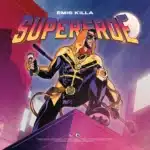
Released on 12 October 2018 through Carosello Records, Supereroe is Emis Killa’s fourth studio album. Following Terza stagione, its thirteen tracks bring together direct rap, melodic hooks and collaborations with artists from different generations. “Rollercoaster” and “Fuoco e benzina” introduced the project, establishing its balance between accessible songwriting and the forceful delivery that had shaped his earlier work.
The title pays tribute to the everyday people who support others without seeking recognition: parents, friends and those whose work involves helping or protecting their communities. That idea extends beyond the music through an accompanying comic and a short film featuring actor Giacomo Ferrara. Emis Killa presents the superhero figure through responsibility and ordinary acts of courage, connecting the project’s visual identity with the people who influenced his life.
Big Fish and Don Joe provide the main production framework, with contemporary beats giving Emis room to move between assertive verses and more melodic performances. The opening “Open Water” leads into a sequence that includes the confrontational “Donald Trump”, the title track and more personal songs such as “Quella foto di noi due”. The changing moods allow different sides of his writing to emerge across a compact tracklist.
The guest appearances broaden the record’s range. Capo Plaza joins him on “Cocaina”, while Gemitaiz and Vegas Jones appear together on “Claro”. “Adios” pairs Emis with Guè, and Carl Brave contributes to “Senza cuore & senza nome”. The international collaboration “Dope 2”, featuring 6ix9ine and PashaPG, adds another contrast to an album that connects established Italian rap with newer sounds and voices.
In June 2019, Supereroe (Bat Edition) expanded the original album with four additional tracks: “Tijuana”, “Batman”, “Montecarlo” and “La mia malattia”. Nayt appears on “Batman”, while Geolier joins Emis on “Montecarlo”. The expanded edition extends the project while preserving the original thirteen-track sequence, bringing its melodic singles, rap collaborations and superhero imagery into a larger collection.
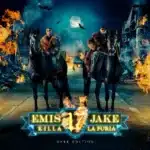
Released on 18 September 2020, 17 is the first joint album by Emis Killa and Jake La Furia. Built on an established friendship and years of collaboration, the project brings their individual styles into a sustained partnership across seventeen tracks. Their shared enthusiasm for rap gives the album its direction, with particular emphasis on verses, delivery and the chemistry between two recognisable voices.
Emis brings an agile flow and carefully constructed rhymes, while Jake’s deeper, rougher voice gives his performances a heavier presence. Those differences help the partnership work: each rapper can change the feel of a track without disrupting its momentum. The opening “Broken Language” immediately places their interaction at the centre, establishing a record driven by the enjoyment of rapping together.
“Malandrino” introduces the pair’s swagger and provocative humour, while other tracks make room for more personal material. Alongside the competitive verses and explicit storytelling, the album explores loyalty, troubled relationships and the distance between public confidence and private dissatisfaction. Solo performances also interrupt the exchanges, with Jake taking the spotlight on “Amore tossico” and Emis on “La mia prigione”. These moments give each artist space to establish a more individual perspective.
The guest list brings several generations of Italian rap into the project. Lazza appears on both “No Insta” and “Gli amici miei”, while “Sparami” features Salmo and Fabri Fibra. These collaborations expand the range of voices while preserving the emphasis on distinctive verses and strong performances.
Massimo Pericolo joins the duo on “L’ultima volta”, and Tedua appears on “Cowboy”. The guests add contrasting approaches to phrasing and storytelling, helping the album move between different moods. Throughout these changes, the connection between Emis and Jake remains the organising force, giving the project a consistent personality.
The cover shown here belongs to 17 – Dark Edition, the expanded version released on 26 February 2021. It adds seven tracks, bringing the total to twenty-four songs and extending the original project with further collaborations. The distinction matters to the album’s chronology: 17 first appeared in 2020, while the Dark Edition followed the next year.
Within Emis Killa’s discography, 17 offers the space to build an entire album around a creative partnership. The contrast between the two rappers gives the songs much of their energy, while their shared musical background keeps the project cohesive. It captures the pleasure of collaboration alongside the technical confidence and direct language that connect their careers.
Released on 19 May 2023, Effetto notte marked Emis Killa’s return to solo studio albums five years after Supereroe. In the intervening period, he had released the collaborative album 17 with Jake La Furia and continued his mixtape series. This project brought the focus back to his own storytelling, using cinema as a thread connecting personal experiences, imagined scenes and contrasting emotional states.
Each track carries a film reference alongside its title, creating connections with stories of ambition, troubled relationships, crime and escape. These references give the songs a shared visual identity while leaving room for different subjects and musical approaches. The cinematic framework supports an album in which Emis moves between the role of narrator and protagonist, examining his experiences from several perspectives.
The opening “PACINO – the godfather” introduces that atmosphere, while “MASERATI – the wolf of wall street” draws on an image of excess and aspiration. Elsewhere, the writing becomes more intimate, with the film references providing a setting for emotional conflict. The contrast between outward confidence and private vulnerability gives the record much of its dramatic tension.
The collaborations bring distinct voices into this framework. Sfera Ebbasta appears on “ON FIRE – paid in full”, while Guè joins Emis on “ALBICOCCA – lolita”. “TOXIC – trainspotting”, featuring Salmo, adds another forceful combination, with the contrast between their deliveries contributing to the track’s unsettled mood.
“MC DRIVE – la haine” brings together Emis, Ernia and Coez, while Lazza appears on “SENZ’ANIMA – nikita”. These different combinations help vary the album’s pace and texture. Throughout the original fourteen tracks, the film references and Emis’s recognisable delivery maintain continuity between the harder performances and more reflective songs.
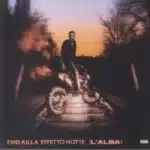
The cover used here is from Effetto notte (L’alba), the expanded edition released on 24 November 2023. Five additional tracks bring its total to nineteen, including “JOE PESCI & DE NIRO – casinò”, featuring Gemitaiz, and a remix of “BEL FINALE – the butterfly effect” with Massimo Pericolo. The additions extend the cinematic approach while opening the project to further collaborations.
Effetto notte stands out in Emis Killa’s catalogue for the consistency of its presentation and its emphasis on writing. Cinema supplies a vocabulary of characters, situations and moods through which he can explore his own concerns. The result brings his technical confidence into a more carefully connected collection of songs, with ambition and unease running through its changing scenes.

Released on 5 December 2025, Musica Triste follows Effetto notte with a varied collection of songs spanning forceful rap, melodic passages and personal reflection. Emis Killa brings together fifteen tracks on the streaming edition, balancing solo performances with collaborations that connect him to different generations of the Italian scene.
The title points towards the nostalgic streak that has often surfaced in his songwriting, including songs about love and relationships. That emotional thread runs alongside provocation, humour and more energetic material. Emis described the project as a collection assembled around songs he enjoyed, giving himself the freedom to follow different moods without fitting every track into a single narrative.
Solo tracks including “LUNA STORTA”, “PHRATE” and “SOGNI SPORCHI” give his voice plenty of space within the busy guest list. The title track brings his reflective side into focus, raising questions about the relationship between the person he has become and the ambition that first drove him. These moments provide a personal centre around which the album’s more outwardly confident performances can move.
The collaborations create several contrasting combinations. Tedua joins Emis on “AMBRA”, while Salmo appears on the compact “ROBB STARK”. “CALDA” features Tony Effe, adding another distinctive voice to a record that frequently changes its vocal pairings and pace.
Baby Gang appears on “FANCULO”, and Capo Plaza joins him on “SERPE”. “UNA SIGA FA” brings together Papa V and Nerissima Serpe, while other guests include Flaco G, Ele A and Promessa. This range of collaborators allows Emis to work with different deliveries and musical personalities while keeping his own presence central.
The artwork gives the project a strong visual identity. A group of masked women fills the cover, with Emis himself absent from the image. He connected that choice to the importance of women across the album’s songs and to its mixture of relationships, club settings and street imagery. The photograph establishes a collective presence that suits a record with so many different voices.
Musica Triste presents an experienced rapper moving comfortably between the competitive and emotional sides of his music. Its short tracks and changing partnerships give it momentum, while the solo material makes room for a more individual perspective. Across those shifts, Emis’s recognisable delivery holds together an album shaped by his continuing attachment to rap and his instinct for direct, memorable songs.
Emis Killa
Artist: Emis Killa
Real Name: Emiliano Rudolf Giambelli
Born: 14 November 1989, Vimercate
Roots: Vimercate, Lombardy
Active since: 2006
Style: Italian hip-hop, hardcore rap and pop rap, with roots in freestyle
Debut album: L’erba cattiva (2012) ↗
Biography
Emis Killa, born Emiliano Rudolf Giambelli on 14 November 1989 in Vimercate, grew up in Brianza and discovered rap in his early teens. Freestyle became his first proving ground: battles demanded quick thinking, sharp delivery and the confidence to face an opponent directly. In 2007, he won the national Tecniche Perfette competition, establishing his name in the Italian underground before reaching a wider audience through recorded music.
Working with Blocco Recordz, he released the mixtape Keta Music in 2009, followed by Champagne e spine in 2010. These early projects brought him into contact with established figures including Jake La Furia, Guè and Marracash. His forceful delivery, wordplay and competitive attitude helped him build a following, leading to a deal with Carosello Records in 2011.
His debut studio album, L’erba cattiva, arrived in 2012 and marked his breakthrough beyond the underground. “Parole di ghiaccio” became a defining early hit, showing that he could combine technical rap with a direct, emotionally accessible song. The album introduced a balance that would remain central to his career: confrontational verses alongside reflections on relationships, frustration and personal ambition.
Mercurio, released in 2013, strengthened his position and reached the top of the Italian album chart. Its expanded edition included “Maracanã”, which became another major success. As his audience grew, Emis developed a broader musical range, moving between harder rap tracks and melodic singles while retaining the assertive delivery shaped by his freestyle background.
With Terza stagione in 2016, he placed renewed emphasis on direct storytelling and tougher rap sounds. Supereroe followed in 2018, featuring “Rollercoaster” and “Fuoco e benzina”. Across these releases, he explored different approaches to songwriting, bringing personal material, street narratives and accessible hooks into the same body of work.
In 2020, he joined Jake La Furia for 17, a full collaborative album built around their shared commitment to rap. The partnership gave both artists space to trade verses and combine their distinct voices, with guests including Lazza, Salmo and Fabri Fibra. He continued his mixtape series with Keta Music, Vol. 3 in 2021.
His next solo studio album, Effetto notte, arrived in 2023. Cinema provided a connecting thread, with songs drawing on film titles and imagery to frame personal stories and different moods. The expanded L’alba edition followed later that year, extending the project with additional tracks.
In December 2025, he released Musica Triste, adding another chapter to a career spanning freestyle competitions, underground mixtapes and chart-topping albums. Throughout that progression, his recognisable voice and emphasis on lyrical delivery have remained central, even as his music has moved between uncompromising rap and more melodic, reflective songwriting.
Albums

Released in 2012, L’erba cattiva is Emis Killa’s debut studio album, marking his move from underground mixtapes and freestyle battles to a wider national audience. Following the attention earned by his earlier releases, it gave him the opportunity to develop a more complete musical identity. The result captures a young rapper eager to prove himself, bringing competitive verses together with personal stories and more accessible songwriting.
His freestyle background is evident in the confidence of his delivery, the punchlines and the way he attacks a beat. There is a restless energy running through the record, with ambition, anger and pride frequently shaping its tone. Alongside that assertiveness, however, Emis makes room for disappointment, difficult relationships and uncertainty, giving the album more emotional range than its confrontational moments might initially suggest.
“Parole di ghiaccio” became the album’s breakthrough song and remains one of the defining tracks of his early career. Its focus on a damaged relationship revealed a more vulnerable voice, while its memorable chorus helped it reach listeners beyond the established hip-hop audience. That balance between direct rap verses and melodic appeal became an important part of his approach to songwriting.
Elsewhere, tracks such as “Il peggiore” foreground the provocative attitude and self-confidence that helped him stand out. The contrast between these performances and the more reflective material gives the record much of its character. Emis moves between the desire to establish his reputation and the need to express experiences that cannot be reduced to a winning punchline.
Guest appearances from Fabri Fibra, Guè and Marracash connect the album to leading figures in Italian rap. Their contributions place the newcomer alongside artists who had already helped expand the genre’s audience, while giving him opportunities to demonstrate his own delivery and personality in an established company.
Musically, L’erba cattiva supports both sides of that identity. Harder beats provide space for forceful verses, while melodic passages and prominent hooks make the more personal songs immediately approachable. This variety helps the album sustain its momentum and introduces the tension between uncompromising rap and broader popular appeal that would continue through his later releases.
As a debut, its significance lies in how clearly it establishes the foundations of Emis Killa’s career. The competitive instincts of the freestyler remain central, but they are joined by an ability to turn private frustrations and relationship problems into songs with a much wider reach. L’erba cattiva documents that transition with the urgency of an artist discovering how far his voice could carry.
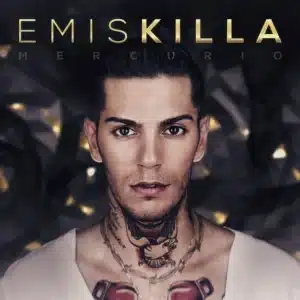
Released on 22 October 2013, Mercurio is Emis Killa’s second studio album, arriving after the breakthrough success of L’erba cattiva. It entered the Italian album chart at number one, confirming that his debut had established a lasting audience. With that success came a broader musical approach, giving more space to melody, contrasting guest voices and songs designed to reach beyond the core rap audience.
“Scordarmi chi ero” places the relationship between success and identity at the centre of the record. The desire to move forward sits alongside the fear of losing contact with the person he was before recognition arrived. That tension gives Mercurio a personal thread beneath its confident performances: ambition remains a driving force, but achievement brings its own questions about belonging and change.
The album also makes room for humour and everyday situations. “A cena dai tuoi”, featuring J-Ax, builds a playful encounter around the awkwardness of meeting a partner’s parents. Its conversational approach and memorable chorus show how Emis could turn a familiar scenario into an accessible rap song without relying entirely on autobiography or competitive verses.
Other collaborations expand the album’s musical range. Skin appears on “Essere umano”, bringing a distinctive vocal presence, while Max Pezzali joins Emis on “La testa vuota”. These pairings introduce voices from outside his immediate hip-hop circle and reflect the record’s willingness to explore different forms of songwriting. The guests help create variety across an album that moves between forceful delivery and more melodic passages.
The harder side of the project comes into focus on “Vietnam flow”, featuring Salmo. Their contrasting voices give the track an aggressive energy, providing a sharp change of pace from the more approachable singles. It is an important part of the album’s balance, keeping technical performance and competitive rap firmly within its wider musical ambitions.
The 5 Stars Edition, released in June 2014, extended the album with four additional songs, including “Maracanã”. Released around the football World Cup, that track became one of Emis Killa’s most recognisable hits and brought a celebratory, communal atmosphere to the expanded edition. Its inclusion represents a later stage of the project, following the original album’s release in 2013.
Mercurio captures Emis Killa adapting to a larger public platform while exploring what that change meant for his music. Personal reflection, comic storytelling and harder rap performances share space throughout the record. That variety makes it a revealing chapter in his development, as the urgency of his debut gives way to a more deliberate exploration of his possibilities as a mainstream artist.

Released on 14 October 2016, Terza stagione is Emis Killa’s third studio album and marks a renewed emphasis on the harder side of his music. Following the broad appeal of Mercurio and its expanded edition, he approached this project as a way of reconnecting with himself through both his writing and his sound. The result is a direct, frequently abrasive record that places rap performance and uncomfortable subject matter at its centre.
The opening track, “Dal basso”, establishes that determined tone, while songs such as “Non era vero” and “Quello di prima” sit within a wider examination of identity and personal change. Emis sounds concerned with how experience has shaped him and how he is perceived after achieving success. His delivery retains its competitive edge, but the writing also makes space for dissatisfaction, vulnerability and the difficulty of reconciling different versions of himself.
The album’s subject matter extends beyond his position in the music industry. Alcohol abuse, obsessive relationships, drugs and the social distance between city centres and the outskirts all enter the picture. These themes give the record a darker atmosphere, with moments in which confidence gives way to troubling behaviour and its consequences. The storytelling draws strength from direct language and situations that feel close to everyday life.
“Prima che sia lunedì” provides one of the album’s most immediate hooks, bringing a more accessible rhythm into a project with plenty of rougher edges. That ability to vary the mood helps the record sustain its seventeen-track running order. Emis moves between energetic performances and more reflective passages, allowing melody to play a role without dominating the album’s overall character.
The collaborations reinforce that range. Neffa joins him on “Parigi”, while Coez appears on “All’alba delle 6:00”, adding contrasting voices to the more melodic side of the record. On “Non è facile”, Jake La Furia brings his forceful delivery, strengthening a musical partnership that would later develop into their joint album 17.
Fabri Fibra appears on “Sopravvissuto”, another meeting between Emis and an established voice in Italian rap. Across the guest appearances, the album maintains a clear centre in Emis himself: his recognisable delivery and recurring concerns hold together songs with different tempos, moods and vocal combinations.
Terza stagione debuted at number one in Italy, showing that this more uncompromising direction could still connect with a substantial audience. Within his discography, it represents a deliberate reassessment of his priorities, bringing the intensity of his rap background into contact with more developed storytelling. Its character comes from that combination of technical confidence, personal unease and a willingness to confront difficult experiences.
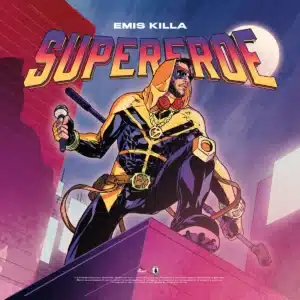
Released on 12 October 2018 through Carosello Records, Supereroe is Emis Killa’s fourth studio album. Following Terza stagione, its thirteen tracks bring together direct rap, melodic hooks and collaborations with artists from different generations. “Rollercoaster” and “Fuoco e benzina” introduced the project, establishing its balance between accessible songwriting and the forceful delivery that had shaped his earlier work.
The title pays tribute to the everyday people who support others without seeking recognition: parents, friends and those whose work involves helping or protecting their communities. That idea extends beyond the music through an accompanying comic and a short film featuring actor Giacomo Ferrara. Emis Killa presents the superhero figure through responsibility and ordinary acts of courage, connecting the project’s visual identity with the people who influenced his life.
Big Fish and Don Joe provide the main production framework, with contemporary beats giving Emis room to move between assertive verses and more melodic performances. The opening “Open Water” leads into a sequence that includes the confrontational “Donald Trump”, the title track and more personal songs such as “Quella foto di noi due”. The changing moods allow different sides of his writing to emerge across a compact tracklist.
The guest appearances broaden the record’s range. Capo Plaza joins him on “Cocaina”, while Gemitaiz and Vegas Jones appear together on “Claro”. “Adios” pairs Emis with Guè, and Carl Brave contributes to “Senza cuore & senza nome”. The international collaboration “Dope 2”, featuring 6ix9ine and PashaPG, adds another contrast to an album that connects established Italian rap with newer sounds and voices.
In June 2019, Supereroe (Bat Edition) expanded the original album with four additional tracks: “Tijuana”, “Batman”, “Montecarlo” and “La mia malattia”. Nayt appears on “Batman”, while Geolier joins Emis on “Montecarlo”. The expanded edition extends the project while preserving the original thirteen-track sequence, bringing its melodic singles, rap collaborations and superhero imagery into a larger collection.
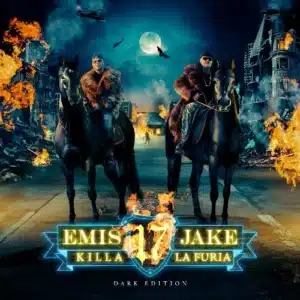
Released on 18 September 2020, 17 is the first joint album by Emis Killa and Jake La Furia. Built on an established friendship and years of collaboration, the project brings their individual styles into a sustained partnership across seventeen tracks. Their shared enthusiasm for rap gives the album its direction, with particular emphasis on verses, delivery and the chemistry between two recognisable voices.
Emis brings an agile flow and carefully constructed rhymes, while Jake’s deeper, rougher voice gives his performances a heavier presence. Those differences help the partnership work: each rapper can change the feel of a track without disrupting its momentum. The opening “Broken Language” immediately places their interaction at the centre, establishing a record driven by the enjoyment of rapping together.
“Malandrino” introduces the pair’s swagger and provocative humour, while other tracks make room for more personal material. Alongside the competitive verses and explicit storytelling, the album explores loyalty, troubled relationships and the distance between public confidence and private dissatisfaction. Solo performances also interrupt the exchanges, with Jake taking the spotlight on “Amore tossico” and Emis on “La mia prigione”. These moments give each artist space to establish a more individual perspective.
The guest list brings several generations of Italian rap into the project. Lazza appears on both “No Insta” and “Gli amici miei”, while “Sparami” features Salmo and Fabri Fibra. These collaborations expand the range of voices while preserving the emphasis on distinctive verses and strong performances.
Massimo Pericolo joins the duo on “L’ultima volta”, and Tedua appears on “Cowboy”. The guests add contrasting approaches to phrasing and storytelling, helping the album move between different moods. Throughout these changes, the connection between Emis and Jake remains the organising force, giving the project a consistent personality.
The cover shown here belongs to 17 – Dark Edition, the expanded version released on 26 February 2021. It adds seven tracks, bringing the total to twenty-four songs and extending the original project with further collaborations. The distinction matters to the album’s chronology: 17 first appeared in 2020, while the Dark Edition followed the next year.
Within Emis Killa’s discography, 17 offers the space to build an entire album around a creative partnership. The contrast between the two rappers gives the songs much of their energy, while their shared musical background keeps the project cohesive. It captures the pleasure of collaboration alongside the technical confidence and direct language that connect their careers.
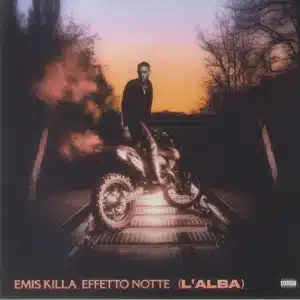
Released on 19 May 2023, Effetto notte marked Emis Killa’s return to solo studio albums five years after Supereroe. In the intervening period, he had released the collaborative album 17 with Jake La Furia and continued his mixtape series. This project brought the focus back to his own storytelling, using cinema as a thread connecting personal experiences, imagined scenes and contrasting emotional states.
Each track carries a film reference alongside its title, creating connections with stories of ambition, troubled relationships, crime and escape. These references give the songs a shared visual identity while leaving room for different subjects and musical approaches. The cinematic framework supports an album in which Emis moves between the role of narrator and protagonist, examining his experiences from several perspectives.
The opening “PACINO – the godfather” introduces that atmosphere, while “MASERATI – the wolf of wall street” draws on an image of excess and aspiration. Elsewhere, the writing becomes more intimate, with the film references providing a setting for emotional conflict. The contrast between outward confidence and private vulnerability gives the record much of its dramatic tension.
The collaborations bring distinct voices into this framework. Sfera Ebbasta appears on “ON FIRE – paid in full”, while Guè joins Emis on “ALBICOCCA – lolita”. “TOXIC – trainspotting”, featuring Salmo, adds another forceful combination, with the contrast between their deliveries contributing to the track’s unsettled mood.
“MC DRIVE – la haine” brings together Emis, Ernia and Coez, while Lazza appears on “SENZ’ANIMA – nikita”. These different combinations help vary the album’s pace and texture. Throughout the original fourteen tracks, the film references and Emis’s recognisable delivery maintain continuity between the harder performances and more reflective songs.
The cover used here is from Effetto notte (L’alba), the expanded edition released on 24 November 2023. Five additional tracks bring its total to nineteen, including “JOE PESCI & DE NIRO – casinò”, featuring Gemitaiz, and a remix of “BEL FINALE – the butterfly effect” with Massimo Pericolo. The additions extend the cinematic approach while opening the project to further collaborations.
Effetto notte stands out in Emis Killa’s catalogue for the consistency of its presentation and its emphasis on writing. Cinema supplies a vocabulary of characters, situations and moods through which he can explore his own concerns. The result brings his technical confidence into a more carefully connected collection of songs, with ambition and unease running through its changing scenes.
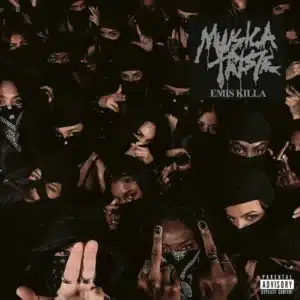
Released on 5 December 2025, Musica Triste follows Effetto notte with a varied collection of songs spanning forceful rap, melodic passages and personal reflection. Emis Killa brings together fifteen tracks on the streaming edition, balancing solo performances with collaborations that connect him to different generations of the Italian scene.
The title points towards the nostalgic streak that has often surfaced in his songwriting, including songs about love and relationships. That emotional thread runs alongside provocation, humour and more energetic material. Emis described the project as a collection assembled around songs he enjoyed, giving himself the freedom to follow different moods without fitting every track into a single narrative.
Solo tracks including “LUNA STORTA”, “PHRATE” and “SOGNI SPORCHI” give his voice plenty of space within the busy guest list. The title track brings his reflective side into focus, raising questions about the relationship between the person he has become and the ambition that first drove him. These moments provide a personal centre around which the album’s more outwardly confident performances can move.
The collaborations create several contrasting combinations. Tedua joins Emis on “AMBRA”, while Salmo appears on the compact “ROBB STARK”. “CALDA” features Tony Effe, adding another distinctive voice to a record that frequently changes its vocal pairings and pace.
Baby Gang appears on “FANCULO”, and Capo Plaza joins him on “SERPE”. “UNA SIGA FA” brings together Papa V and Nerissima Serpe, while other guests include Flaco G, Ele A and Promessa. This range of collaborators allows Emis to work with different deliveries and musical personalities while keeping his own presence central.
The artwork gives the project a strong visual identity. A group of masked women fills the cover, with Emis himself absent from the image. He connected that choice to the importance of women across the album’s songs and to its mixture of relationships, club settings and street imagery. The photograph establishes a collective presence that suits a record with so many different voices.
Musica Triste presents an experienced rapper moving comfortably between the competitive and emotional sides of his music. Its short tracks and changing partnerships give it momentum, while the solo material makes room for a more individual perspective. Across those shifts, Emis’s recognisable delivery holds together an album shaped by his continuing attachment to rap and his instinct for direct, memorable songs.